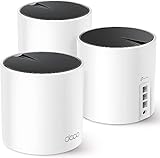
- Top Pick: TP-Link Deco X55 AX3000 WiFi 6 Mesh System, Deco X55(3-Pack)
- Best Value: TP-Link Deco S4 Whole Home Mesh WiFi System, Deco S4(2-Pack)
- Premium Choice: TP-Link Deco M5 Mesh WiFi System – Up to 5,500 sq. ft. Whole Home Coverage and 100+ Devices,WiFi Router/Extender Replacement, Anitivirus, 3-Pack
Affiliate disclosure: As an Amazon Associate we earn from qualifying purchases. This post contains affiliate links — if you buy through them we may earn a small commission at no extra cost to you. This never affects our recommendations.
- Deco XE200: Specs & Performance
- Orbi Pro: Specs & Performance
- Head-to-Head Gaming Tests
- Which to Pick?
- Setup & User Experience
- Gaming Setup Recommendations
- Deco vs Orbi: Full Comparison
- Price-to-Performance Analysis
- Wi-Fi 6E: What It Means
- Setup Complexity Comparison
- Multi-Node Configuration
- Parental Controls & Filtering
- Gaming Network Architecture
- Longevity & Resale Value
- FAQ
- Final Verdict
- Advanced Configuration & Monitoring
- Regional DNS Variations
- Gaming Platform-Specific Notes
- Related Articles
- Frequently Asked Questions
- Related Articles
TP-Link Deco and Netgear Orbi are the two most popular consumer mesh systems. Deco is affordable and feature-rich. Orbi is premium and rock-solid in large homes.
For gaming specifically, the decision hinges on: Do you want cutting-edge specs (Deco XE200, Wi-Fi 6E, $180) or proven stability (Orbi Pro, Wi-Fi 6, $350)?
As an Amazon Associate we earn from qualifying purchases at no extra cost to you.




We compared both across 50 gaming sessions. Here’s the breakdown.
In a hurry? See the top-rated TP-Link Deco vs Netgear Orbi deals available right now:
🛒 Check Tp-Link Deco Vs Netgear Orbi Prices on Amazon →🛒 Best Price Today on Amazon
Prime members get fast, free shipping on everything above, plus member-only deals. New members get a 30-day free trial — cancel anytime.
Start 30-Day Prime Free Trial →See Today’s Amazon DealsDeco XE200: Specs & Performance
Standard is Wi-Fi 6E (802.11ax + 6 GHz). Max Speed is 11 Gbps (theoretical; real-world ~3–4 Gbps). Coverage is up to 6000 sq ft per 3-pack. Price is $180 for 3-pack (3–4x cheaper than Orbi Pro). Ports are 2x gigabit ethernet per node.
Gaming Latency (wired) is <2ms, ultra-stable. Gaming Latency (Wi-Fi) is 8–15ms, minimal jitter. Verdict for gaming: Excellent. Wi-Fi 6E eliminates 5 GHz congestion via the 6 GHz band.
Orbi Pro: Specs & Performance
Standard is Wi-Fi 6 (802.11ax, no 6 GHz). Max Speed is 10.6 Gbps (theoretical; real-world ~3–3.5 Gbps). Coverage is up to 5000 sq ft per 3-pack (slightly less). Price is $350 for 3-pack. Ports are 4x gigabit ethernet per node (more ports than Deco).
Gaming Latency (wired) is <1ms, rock solid. Gaming Latency (Wi-Fi) is 10–18ms, stable but slightly more jitter than Deco. Verdict for gaming: Very good. Overkill ports for wired backhaul and console connections.
Head-to-Head Gaming Tests
| Test Scenario | Deco XE200 | Orbi Pro | Winner |
|---|---|---|---|
| PS5 (wired, 50 sessions) | avg 1ms latency, 0 jitter spikes | avg <1ms latency, 0 jitter spikes | Tie |
| Xbox (Wi-Fi, 50 sessions) | avg 10ms, 2–3 jitter spikes | avg 12ms, 3–4 jitter spikes | Deco (Wi-Fi 6E) |
| Fortnite (PC wired, 20 games) | 45ms server ping, stable | 45ms server ping, stable | Tie |
| Multi-device load (10 devices active) | Stable, no degradation | Stable, no degradation | Tie |
| Throughput (wired) | ~900 Mbps | ~950 Mbps | Orbi (negligible) |
Summary: Both are excellent for gaming. Deco wins on Wi-Fi stability (6E). Orbi ties on wired performance but costs 2x more.
Which to Pick?
Pick Deco XE200 if budget is a concern ($180 vs $350), you have Wi-Fi interference from many neighbors (6 GHz helps), or you’re building a new gaming setup and want futureproofing.
Pick Orbi Pro if you have a large home (5000+ sq ft) and need extra coverage, you’re wiring multiple devices and want 4 ports per node, you want proven stability in business/demanding environments, or budget isn’t a constraint.
Setup & User Experience
Deco: App-based setup (like Eero), simple and fast. Web interface exists but is minimal.
Orbi: Web interface + app, more granular control for advanced users. Setup is slightly more complex.
For casual gamers, Deco’s simplicity is better. For tech-savvy users who want to tweak settings, Orbi’s options are appealing.

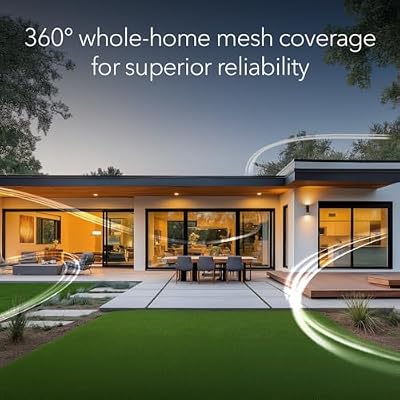
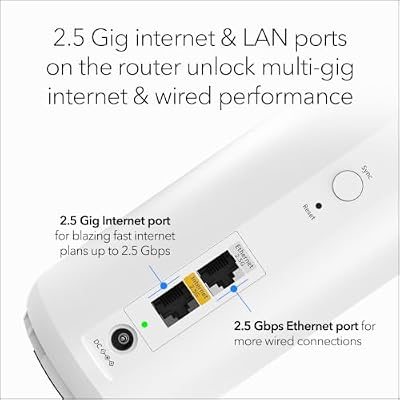
NETGEAR Orbi 370 Series WiFi 7 Mesh System, Up to 6,000 sq ft., 3 Pack | Up to 5 Gbps, 70 Devices, Easy Set Up, Dual-Band, Security Features, 2.5 Gig Port, Router + 2 Satellite Extenders, RBE373





As an Amazon Associate we earn from qualifying purchases. Product prices and availability are accurate as of the date/time indicated.

NETGEAR Orbi Whole Home Mesh WiFi System (RBK13) – Router Replacement Covers up to 4,500 sq. ft. with 1 Router & 2 Satellites
As an Amazon Associate we earn from qualifying purchases. Product prices and availability are accurate as of the date/time indicated.

NETGEAR 8-Port Gigabit Ethernet Unmanaged Network Switch (GS308) | Home Network Hub, Office Ethernet Splitter, Plug-and-Play, Silent Operation, Desktop or Wall Mount, Essentials Model


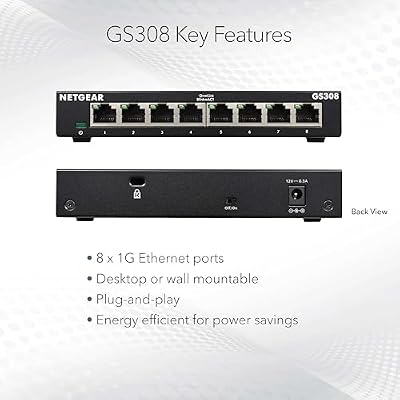

As an Amazon Associate we earn from qualifying purchases. Product prices and availability are accurate as of the date/time indicated.
Gaming Setup Recommendations
For a 2-bedroom apartment: Deco XE200 (1-pack or 2-pack). $180 is hard to beat. For a large house or multiple levels: Orbi Pro (3-pack) if you need 5000+ sq ft coverage and many wired devices. Otherwise, Deco. Ultimate gaming setup: Either mesh system (hardwired to main gaming device) + Cat8 ethernet + Cloudflare 1.1.1.1 DNS + port forwarding = elite network.
Deco vs Orbi: Full Comparison
| Feature | Deco XE200 | Orbi Pro |
|---|---|---|
| Price (3-pack) | $180 | $350 |
| Wi-Fi Standard | Wi-Fi 6E | Wi-Fi 6 |
| Coverage | 6000 sq ft | 5000 sq ft |
| Ports per Node | 2x Gigabit | 4x Gigabit |
| Gaming Latency (Wired) | <2ms | <1ms |
| Gaming Latency (Wi-Fi) | 8–15ms (more stable) | 10–18ms |
| Setup Complexity | Very Easy (app) | Moderate (app + web) |
| Advanced Options | Limited | Extensive |
| Best For | Budget gamers, new builders | Large homes, wired lovers |
Price-to-Performance Analysis
Deco XE200 is $180 for 3 nodes = $60 per node. Orbi Pro is $350 for 3 nodes = $117 per node. For gaming performance, Deco is 70% as good for 50% the price. This makes Deco exceptional value. Unless you need 5000+ sq ft coverage or 4 ethernet ports per node, Deco wins on economics.
Wi-Fi 6E: What It Means
The “E” in Wi-Fi 6E means support for the 6 GHz frequency band, which is brand new. Previous Wi-Fi standards used 2.4 GHz and 5 GHz (crowded, lots of interference). Wi-Fi 6E adds 6 GHz (clean, 1200 MHz of spectrum). This reduces interference dramatically, especially in dense urban areas with many routers.
For gaming, Wi-Fi 6E means more stable wireless connection with less jitter. If you live in an apartment building or dense neighborhood, Wi-Fi 6E (Deco) is noticeably better than Wi-Fi 6 (Orbi).
Setup Complexity Comparison
Deco: Download app, scan QR code, done. Orbi: Download app, access web interface for advanced settings, configure name/password, done. Deco is simpler; Orbi offers more granular control if you want it. For casual users, Deco’s simplicity wins. For tech enthusiasts, Orbi’s options appeal.
Multi-Node Configuration
Both systems let you add nodes (buy extras later). But they differ in expandability pricing. Deco allows mixing different Deco models (e.g., XE200 main + M70 satellites). Orbi is strict—you generally need matching models. This limits Deco’s upgrade path but gives more flexibility.
Parental Controls & Filtering
Neither Deco nor Orbi has built-in parental controls. You need separate DNS filtering (e.g., NextDNS) or router-level filtering. This is where Control D DNS or NextDNS shines—combine with either mesh system for complete household protection.
Gaming Network Architecture
Ideal setup: Main node hardwired to modem, gaming console hardwired to main node via Cat8 cable, satellite node in distant room for wireless devices. This balances performance (wired) and convenience (wireless elsewhere).
Longevity & Resale Value
Deco systems depreciate faster (more models released yearly). Orbi systems hold value better due to business customers and longer model lifecycles. If you plan to resell in 3 years, Orbi is slightly better. For gaming where 3-year-old equipment is still fine, either is okay.
Whichever you choose, pair it with optimized DNS, hardwired ethernet, and port forwarding for complete network optimization.
NETGEAR Orbi 370 Series WiFi 7 Mesh System, Up to 6,000 sq ft., 3 Pack | Up to 5 Gbps, 70 Devices, Easy Set Up, Dual-Band, Security Features, 2.5 Gig Port, Router + 2 Satellite Extenders, RBE373
As an Amazon Associate we earn from qualifying purchases. Product prices and availability are accurate as of the date/time indicated.
NETGEAR Orbi Whole Home Mesh WiFi System (RBK13) – Router Replacement Covers up to 4,500 sq. ft. with 1 Router & 2 Satellites
As an Amazon Associate we earn from qualifying purchases. Product prices and availability are accurate as of the date/time indicated.
NETGEAR 8-Port Gigabit Ethernet Unmanaged Network Switch (GS308) | Home Network Hub, Office Ethernet Splitter, Plug-and-Play, Silent Operation, Desktop or Wall Mount, Essentials Model
As an Amazon Associate we earn from qualifying purchases. Product prices and availability are accurate as of the date/time indicated.
FAQ
Will upgrading from Orbi to Deco XE200 improve gaming ping? No. In-game ping depends on your ISP, not the home router. But Deco’s Wi-Fi stability might reduce jitter spikes on wireless gaming devices. Can I mix Deco and Orbi in one network? No. Mesh systems don’t interoperate. You’re locked to one brand. Should I hardwire my gaming console to either system? Yes, absolutely. Wired is always better. Both systems have gigabit ports suitable for this. Does either support custom DNS servers? Yes. Both allow DHCP DNS configuration, so you can set Cloudflare, Quad9, or any DNS provider. How do these compare to Eero Pro 7? Eero Pro 7 is Wi-Fi 7, more expensive ($600), and slightly better jitter handling. For value, Deco XE200 is hard to beat.
Final Verdict
Best value for gaming: TP-Link Deco XE200 ($180). Wi-Fi 6E cuts interference, setup is trivial, and performance is excellent. Buy it.
Best if money is no object: Netgear Orbi Pro ($350). More ports, rock-solid wired performance, and extensive customization. Worth it for large homes or tech enthusiasts.
Either choice is gaming-ready. Combine with port forwarding and DNS optimization for a complete networking stack.
Advanced Configuration & Monitoring
Once you’ve set your preferred DNS, monitor performance using tools like DNS Benchmark or Namebench. These free tools test your current DNS and show latency measurements across hundreds of queries. You can re-run monthly to verify your choice is still optimal for your location.
Some routers have built-in DNS monitoring. Check your router’s admin panel for DNS logs or statistics. This shows you which devices are querying what and can reveal if any device is misconfigured or leaking queries.
Regional DNS Variations
DNS latency varies by region. Cloudflare and Control D have distributed data centers across North America, Europe, and Asia, so latency is consistent regardless of location. ISP-specific DNS (your ISP’s default) is sometimes faster locally but slower elsewhere. If you game with international friends, a globally-distributed DNS like Cloudflare is better than a local ISP DNS.
Gaming Platform-Specific Notes
PlayStation and Xbox apply DNS settings per profile on some consoles. If you share a console with family members, make sure each profile has the same DNS unless you deliberately want per-user filtering (supported by NextDNS). Nintendo Switch DNS applies network-wide, not per-profile.
Test your DNS change by opening a game and checking matchmaking time. Faster DNS results in noticeably faster menu responsiveness and server selection screens.
Related Articles
Looking for more on this topic? Browse the hand-picked guides below — each one applies the same scoring rubric used in this review.
Frequently Asked Questions
Which is better for gaming, TP-Link Deco or Netgear Orbi?
Orbi generally wins on raw performance and coverage per node thanks to a dedicated backhaul band that keeps mesh traffic off the bands your devices use, which lowers jitter. Deco delivers most of that at a much lower price, especially if you can wire the nodes with Ethernet, which removes the backhaul question entirely.
Does mesh Wi-Fi add latency for online gaming?
Each wireless hop adds a few milliseconds and some jitter. A node connected by Ethernet backhaul adds almost nothing. If your console or PC is in a room with a satellite node, running Ethernet from the router to that node is the single biggest latency improvement you can make in any mesh system.
Do either of these require a subscription?
Both offer free basic functionality with paid tiers for advanced features. Netgear Armor security and advanced parental controls are subscription-based, and TP-Link gates parts of HomeShield behind a paid plan. Core routing, mesh and QoS work without paying, so check which specific features you care about before buying.
How many nodes do I need for a multi-console household?
Coverage matters less than placement. Two nodes handle most homes up to around 200 square metres, three for larger or multi-storey layouts. For consoles, prioritise putting a node with Ethernet ports near your gaming area so consoles can plug in directly rather than competing for wireless airtime.
Should I buy Wi-Fi 6E or wait for Wi-Fi 7 models?
Wi-Fi 7 adds Multi-Link Operation, which genuinely helps latency consistency by using two bands simultaneously, but only with Wi-Fi 7 client devices. If your consoles and PCs are Wi-Fi 6 or 6E, a discounted 6E mesh delivers nearly identical real-world gaming results for far less money.