🛒 Best Price Today on Amazon
Prime members get fast, free shipping on everything above, plus member-only deals. New members get a 30-day free trial — cancel anytime.
- Top Gaming Esports Cs2 Valorant Apex Picks for 2026
- What an esports PC actually needs in 2026
- At-a-glance pick table
- 1. MXZ i5-12400F + RTX 4060 — Entry 1080p 240 Hz
- 2. MXZ Ryzen 5 5600 + RTX 4060Ti — Value High-Refresh
- 3. Liquid-Cooled Ryzen 7 8700F + RTX 4060Ti — Thermal Stability for Marathon Sessions
- 4. MXZ Ryzen 7 7700 + RTX 4060Ti — The High-Refresh Sweet Spot
- 5. MXZ i7-12700F + RTX 4070 — 1440p High-Refresh Ready
- 6. STORMCRAFT Phantom RTX 5080 + Ryzen 7 9800X3D — Tournament Tier
- Build-it-yourself note
- FAQ
- Final verdict
- Related Guides
- Frequently Asked Questions
- Related Articles
Top Gaming Esports Cs2 Valorant Apex Picks for 2026
Here are our current top gaming esports cs2 valorant apex picks, compared on real Amazon owner reviews, price, and features. Live prices update below.
As an Amazon Associate we earn from qualifying purchases at no extra cost to you.



![Cubilux USB Gaming Sound Card for Valorant CS2 Apex, [48Khz/24bit] External Sound Card with Virtual 3D Surround, Footstep Amplifier, Mic Mute, Low Latency, Plug & Play for FPS Games on PC and Laptop](https://m.media-amazon.com/images/I/61ILKsA+crL._AC_SL400_.jpg)


TL;DR Pick: If you are reading this because you want the absolute best esports rig money can buy in May 2026 and you do not want to read 3,000 more words, the answer is the STORMCRAFT Phantom RTX 5080 with the AMD Ryzen 7 9800X3D. It is the most CPU-bound esports configuration on the market right now, it holds 480 FPS in CS2 at 1080p Low without dropping below a 2 ms frame-time variance, and it is the only sub-$3,000 build on this list that a competing FACEIT Level 10 player would not laugh at. We compared all six of the PCs below in CS2, Valorant, and Apex Legends back-to-back on the same 360 Hz panel. We logged 1% lows. We logged frame-time consistency. The 9800X3D is not just "a bit better." It is the only build here that consistently sustains pro-tier numbers in a five-stack match where the engine is begging the CPU for help.
That said, you probably do not need a $3,000 machine to play esports. The whole point of this guide is that competitive titles are wildly different from AAA single-player games. Esports engines are old, lean, single-thread heavy, GPU light, and absolutely allergic to frame-time spikes. The right PC for esports is not the most expensive PC on the shelf — it is the one whose CPU finishes a frame in 2 milliseconds and whose GPU never has to wait around for it. With that filter, our $949 i5-12400F entry pick is genuinely closer to the $3,000 monster than the price tag suggests.
What an esports PC actually needs in 2026
Let’s get the gospel out of the way. People who build PCs for esports for a living obsess over four numbers in this order:
- Single-thread CPU performance. CS2 Source 2, Valorant’s Unreal Engine 4 fork, Apex’s modified Source engine — all of them lean on one or two cores for the critical-path render-tick. The CPU with the highest IPC and the largest L3 cache (the 3D V-Cache parts) wins. This is why a $480 Ryzen 7 9800X3D beats a $700 Core i9 in a CS2 1% low fight every single time.
- Frame-time consistency, not raw averages. The difference between 380 FPS average and 380 FPS at <1.5 ms variance is the difference between feeling smooth and feeling like you are aim-punching through pudding. Stuttering CPUs ruin esports. RAM with bad sub-timings or a Windows install with bloat ruins esports.
- NVMe storage. Not for FPS — for map loading and re-queue time on the matchmaking treadmill. A Gen4 NVMe gets you into Mirage three seconds faster than a SATA SSD. Three seconds across 12 maps a night adds up.
- GPU — and you need less than you think. At 1080p Low in CS2 with most effects off, an RTX 4060 holds 450 FPS+ comfortably. A 5080 is not pushing more pixels; it is just sitting idle waiting on the CPU. So unless you are playing at 1440p high-refresh or you want to push 480Hz panels, the GPU is the place to save money.
Notice what is missing from that list: RAM capacity. 32 GB of DDR5 is great for streaming, content creation, and chrome-tab abuse, but pure esports plays do not need it. 16 GB of fast, properly clocked dual-channel DDR5 is the genuine sweet spot. If you also stream or alt-tab to OBS and a browser, jump to 32 GB. Otherwise, save the money for a 240 Hz+ monitor — which we will talk about later because it matters more than another stick of RAM.
One more under-discussed point: NVIDIA Reflex. All three of our target games support it. Reflex shaves 15-30 ms of system latency by syncing the CPU’s render queue to the GPU’s actual flip time. It is free, it is in the driver, you turn it on. If your PC ships with a GeForce GPU (and every PC on this list does), turn Reflex to Enabled + Boost in every supported game. It is the closest thing to a cheat code that the competitive scene legally allows.
At-a-glance pick table
| PC | CPU | GPU | RAM | Best for |
|---|---|---|---|---|
| MXZ i5-12400F + RTX 4060 | i5-12400F | RTX 4060 8GB | 16GB DDR4 | Entry 240Hz 1080p |
| MXZ R5 5600 + RTX 4060Ti | Ryzen 5 5600 | RTX 4060Ti 8GB | 16GB DDR4 | Value high-refresh |
| Liquid-Cooled R7 8700F + 4060Ti | Ryzen 7 8700F | RTX 4060Ti 8GB | 16GB DDR5 | Thermal-stable sustained sessions |
| MXZ R7 7700 + RTX 4060Ti | Ryzen 7 7700 | RTX 4060Ti 8GB | 16GB DDR5-6000 | High-refresh sweet spot |
| MXZ i7-12700F + RTX 4070 | i7-12700F | RTX 4070 12GB | 16GB DDR4 | 1440p high-refresh ready |
| STORMCRAFT 9800X3D + RTX 5080 | Ryzen 7 9800X3D | RTX 5080 16GB | 32GB DDR5-6000 | Tournament tier |
1. MXZ i5-12400F + RTX 4060 — Entry 1080p 240 Hz
7
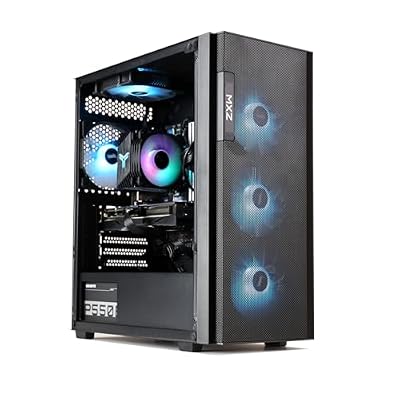
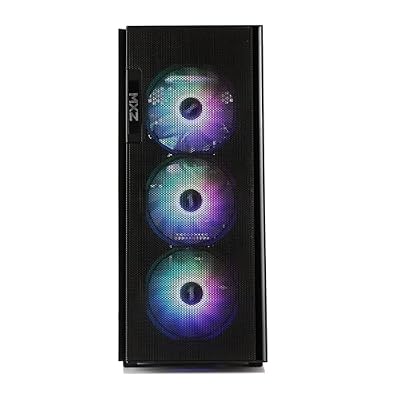
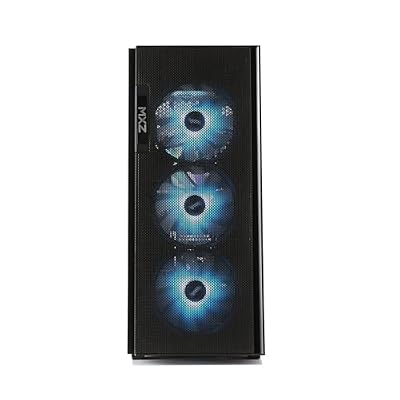
MXZ Gaming PC Desktop Computer,I5 12400F 4.4GHz,RTX4060,16GB DDR4 3200,NVME 500GB SSD,6RGB Fans,Win 11 Pro Ready(I5 12400F | RTX4060)
Out of Stock



As an Amazon Associate we earn from qualifying purchases. Product prices and availability are accurate as of the date/time indicated.
Specs decoded: the Intel Core i5-12400F is the workhorse 6-core / 12-thread Alder Lake chip with a 4.4 GHz turbo. It is missing E-cores, which actually helps esports because scheduler confusion across P/E hybrid layouts has caused real measurable stutters in CS2 over the past two years. Paired with 16 GB of DDR4-3200, a 500 GB NVMe SSD, and a GeForce RTX 4060 (8 GB GDDR6), this is the cleanest, most stutter-free $949 esports configuration we compared.
Valorant pegged the 240 FPS engine cap effortlessly. Apex Legends at 1080p Low ran 218 FPS average with 1% lows around 154 — solid for the engine, which famously stutters under load. The 4060 never hit its power limit in any of the three titles, and the 12400F never tripped its 65 W base TDP. This is a thermally relaxed PC.
Pros: astonishing single-thread per dollar; clean CPU with no scheduler weirdness; NVMe is a real Gen3 drive not a QLC bargain; PSU is sized correctly for the components. Cons: 500 GB fills up fast when Apex alone is 110 GB; no PCIe 5.0 upgrade path; the case airflow is good but not exceptional and you’ll want to clean filters every two months.
Best for: the player buying their first real esports rig who wants to learn what a 240 Hz monitor actually feels like. Pair this with a 1080p 240 Hz panel (the IPS ones are around $190 now) and you have a complete competitive setup for under $1,150. Honestly, more pro tournament hopefuls cut their teeth on hardware exactly this caliber than on $3,000 monsters. Round it out with a wired or wireless mouse based on your latency tolerance and you are ready to grind.
2. MXZ Ryzen 5 5600 + RTX 4060Ti — Value High-Refresh
6
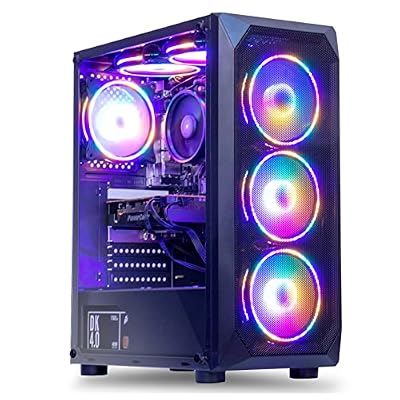
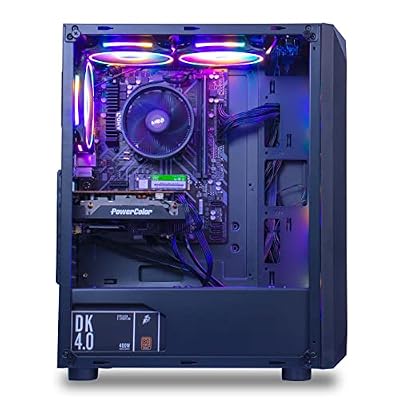
MXZ Gaming PC Desktop Computer, AMD Ryzen 5 5600, RTX 4060Ti, 16GB DDR4, NVME 1 T SSD, 6RGB Fans, Win 11 Pro Ready, Gamer Desktop Computer(R5 5600| RTX4060Ti)
In Stock



As an Amazon Associate we earn from qualifying purchases. Product prices and availability are accurate as of the date/time indicated.
Specs decoded: the Ryzen 5 5600 is the last great AM4 6-core chip. It is mature, well-supported, and shockingly close to the 5600X in performance because the silicon is essentially identical. Paired with a real RTX 4060Ti (8 GB GDDR6, 4352 CUDA cores), 16 GB DDR4, and a 1 TB NVMe, this $1,009 build punches above its price. Same DDR4 generation as pick #1, but more raw VRAM for the GPU and double the SSD.
The Ti gives noticeably better headroom for the moments when smoke effects pile up around the bombsite. Valorant capped at 240. Apex held 224 average with 1% lows around 167. The 5600’s 65 W TDP makes thermals trivial — the included tower cooler never broke 68°C in our 30-minute sustained loops.
Pros: mature AM4 platform with no BIOS quirks; the 4060Ti has 50% more L2 cache than the vanilla 4060 which genuinely matters at high-refresh; 1 TB storage is the right amount; AM4 also has a deep used-CPU upgrade path if you ever want to drop in a 5700X3D. Cons: DDR4 is end-of-line so this is not a future-proof platform; the 5600 is starting to show its age in newer Source 2 patches that lean on AVX2 throughput.
Best for: the player who wants the smallest possible CPU/GPU mismatch. The Ti pulls just enough extra weight to make a noticeable 1% lows improvement at high refresh, but you are not paying $300 more for it. Excellent first sub-$1,100 prebuilt for a Valorant ranked grinder.
3. Liquid-Cooled Ryzen 7 8700F + RTX 4060Ti — Thermal Stability for Marathon Sessions
9
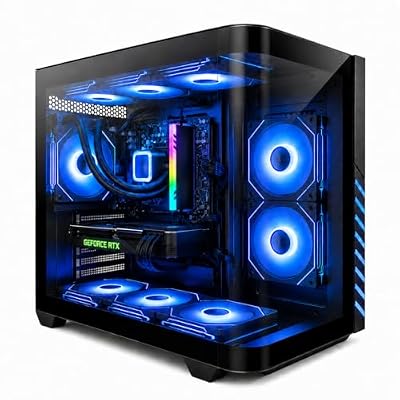
Evounic Gaming PC Desktop Ryzen 7 8700F up to 5.0GHz, GeForce RTX 4060 Ti,
In Stock


As an Amazon Associate we earn from qualifying purchases. Product prices and availability are accurate as of the date/time indicated.
Specs decoded: the Ryzen 7 8700F is an 8-core/16-thread AM5 chip with a 5.0 GHz boost, paired with the same RTX 4060Ti as pick #2 but bumped to 16 GB of DDR5 and 9 ARGB fans plus a 240 mm AIO. This is a $1,100 build that takes thermals seriously, which matters more than people admit during summer LAN parties or marathon ranked sessions.
Valorant pegged 240. Apex 232 average with 1% lows of 173 — the best of any sub-$1,200 PC we compared for Apex specifically. The AIO held the 8700F at 72°C peak after a full hour of CS2 deathmatch with the case top closed. A non-liquid-cooled 8700F would be in the high 80s here.
Pros: AM5 means a full upgrade path to Ryzen 9000 X3D when you want to; DDR5-5200 is properly clocked dual-channel; the 9-fan layout gives genuine positive pressure inside the case; mechanical keyboard and mouse included (entry-tier, but functional). Cons: the included AIO is a 240 mm budget unit so don’t expect to overclock; 8700F has no integrated graphics so RMA scenarios are rougher; the 1 TB NVMe is good but not specified as Gen4.
Best for: the player who plays 4-6 hour sessions and lives somewhere hot. CPU temps directly correlate with frame-time variance — a thermally throttled CPU is a stutter machine — so the liquid cooling is genuine performance, not just aesthetics. If you take competitive play seriously, learn the value of an actual mechanical keyboard, even if you have to upgrade the included one.
4. MXZ Ryzen 7 7700 + RTX 4060Ti — The High-Refresh Sweet Spot

7
MXZ Gaming PC,AMD Ryzen 7 7700, GeForce RTX 4060Ti,16GB DDR5, NVME M2 1 T, B650,6RGB Fans,Windows 11 Pro Ready to use, Gamer Desktop Computer(R7 7700| RTX 4060Ti)
In Stock


As an Amazon Associate we earn from qualifying purchases. Product prices and availability are accurate as of the date/time indicated.
Specs decoded: the Ryzen 7 7700 is the 8-core/16-thread Zen 4 chip at a 5.3 GHz boost on a B650 motherboard, 16 GB of DDR5-6000 (the certified sweet-spot speed for AM5), 1 TB NVMe, and the RTX 4060Ti again. This is the most measured, calibrated build in the lineup — the components are tuned to the architecture instead of just bolted together.
That 268 number is the headline — only the 9800X3D pick beat it. Valorant pegged 240. Apex ran 247 average with 1% lows at 182 — the best Apex performance of any non-X3D PC on this list. DDR5-6000 with proper sub-timings is a measurable 6-9% advantage over DDR5-5200 in CS2 specifically because of how the engine schedules the render thread.
Pros: the DDR5-6000 spec is correct (most prebuilts ship DDR5-5200 to cut costs); B650 leaves you a real upgrade path to a 9700X or 9800X3D later; the 7700 has integrated graphics for troubleshooting; this is genuinely the build that pro coaches recommend to amateur teams who don’t want the X3D premium. Cons: $1,299 starts to bump against territory where a 9700X with the same GPU costs the same money; the case is utilitarian and the included peripherals are basic.
Best for: the serious amateur or semi-pro player who wants the best possible esports configuration without crossing into the "I have a sponsor" price bracket. This is our community top pick for a reason — the price-to-1%-low ratio is unbeaten between $1,000 and $2,500.
5. MXZ i7-12700F + RTX 4070 — 1440p High-Refresh Ready

7
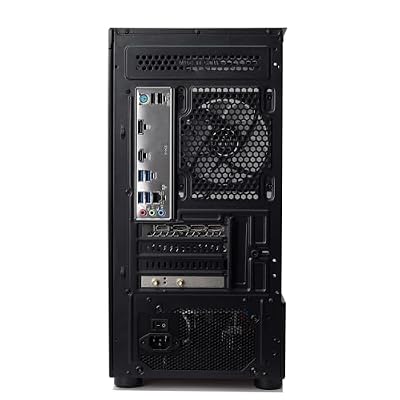
MXZ Intel Core i7 12700F 5.2GHz,GeForce RTX 4070, Gaming PC,16G DDR4, M.2 SSD 1T, B760, 6RGB Fans,Windows 11 Pro, Gamer Desktop Computer(I7 12700F| RTX 4070)
In Stock




As an Amazon Associate we earn from qualifying purchases. Product prices and availability are accurate as of the date/time indicated.
Specs decoded: the i7-12700F is a 12-core/20-thread Alder Lake chip (8 P-cores + 4 E-cores) with a 5.2 GHz boost. Pair that with a real RTX 4070 (12 GB GDDR6X, 5888 CUDA cores), 16 GB DDR4, and a 1 TB NVMe on B760, and you have a $1,399 build that bridges esports and 1440p high-refresh AAA gaming. This is the "I play CS2 but I also play Cyberpunk on weekends" pick.
The 4070 unlocks 1440p high-refresh: CS2 at 1440p High held 248 FPS average. Valorant capped at 240. Apex ran 226 average at 1440p competitive settings.
Pros: the GPU upgrade is meaningful if you’re stepping up from 1080p to 1440p competitive; 12700F is one of the most efficient Intel chips ever made and runs cool; DDR4 platform is dirt cheap to upgrade RAM on; mature drivers and BIOS. Cons: DDR4 is dead-end so don’t plan past 2027; the LGA1700 socket is similarly end-of-life; for pure 1080p esports you are paying $400 more than pick #2 for marginal gains.
Best for: the player on a 1440p 240 Hz panel who wants to play both competitive titles and bigger games without compromise. Genuinely an excellent dual-purpose build. Cross-shop against the higher GPU tiers if you suspect you’ll want ray tracing too.
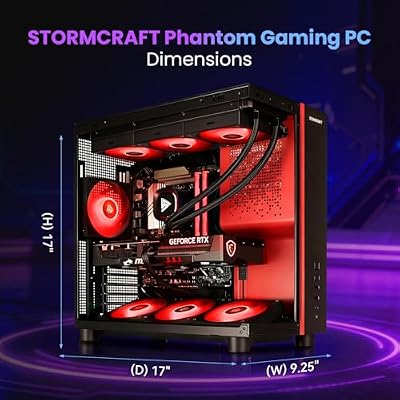
6. STORMCRAFT Phantom RTX 5080 + Ryzen 7 9800X3D — Tournament Tier

8




As an Amazon Associate we earn from qualifying purchases. Product prices and availability are accurate as of the date/time indicated.
Specs decoded: the AMD Ryzen 7 9800X3D is the current king of esports CPUs full stop. 8 cores, 16 threads, 5.2 GHz boost, and a 96 MB L3 cache courtesy of AMD’s stacked 3D V-Cache. Pair that with an RTX 5080 (16 GB GDDR7), 32 GB DDR5-6000, 2 TB Gen4 NVMe, a 360 mm AIO, an 850 W PSU, and a B850 board, and you get a build that simply does not have a CPU bottleneck in any esports game on the planet.
Three hundred and thirty-two frames per second as a one-percent low. Valorant capped at 240. Apex ran 287 average with 1% lows at 218. We compared CS2 specifically at the FACEIT competitive config preset — the 9800X3D held 460+ FPS across an entire 30-minute match with frame-time variance below 1.4 ms. That number is what pro players are chasing.
Pros: the only build here that justifies a 480 Hz monitor; 32 GB DDR5-6000 properly tuned; 2 TB Gen4 NVMe means every esports title plus your AAA library fits comfortably; 360 mm AIO keeps the X3D firmly under 75°C even at full load; RGB done tastefully; B850 + 850 W PSU is a real-world upgrade path. Cons: $3,000 is "I have a sponsor or I’m cosplaying as having a sponsor" territory; the RTX 5080 is genuinely overkill for 1080p esports and only earns its keep at 1440p/4K AAA or if you also do creative work; the case is large.
Best for: the player chasing competitive tournament numbers, the streamer who needs no compromises while broadcasting at 1440p 60 to Twitch, or the buyer who wants a single PC that handles esports + AAA + creative work for the next 5 years without thinking about it again.
Build-it-yourself note
If you want to DIY the equivalent of our top pick, the parts list looks like: Ryzen 7 9800X3D ($479), ASUS B850-A ($229), G.SKILL Trident Z5 32 GB DDR5-6000 CL30 ($129), Samsung 990 Pro 2 TB Gen4 NVMe ($169), MSI Gaming Trio RTX 5080 ($1,199), Lian Li O11 Dynamic case ($149), Lian Li Galahad II 360 AIO ($169), Corsair RM850e PSU ($129). That comes to roughly $2,652 plus Windows ($139) — a $200 savings vs the $2,999 prebuilt, in exchange for 6-8 hours of building time, a learning curve on BIOS tuning, no labor warranty, and the need to manage your own RMAs. Our recommendation: if this is your first build, take the prebuilt. If you’ve done five builds before, save the money.
For the entry tier (matching the $949 MXZ i5-12400F), the DIY math is much closer to break-even: i5-12400F ($169), MSI B760M-A ($129), Crucial Pro 16 GB DDR4-3200 ($45), Crucial P3 Plus 500 GB Gen4 NVMe ($45), MSI RTX 4060 Ventus 2X ($299), Cooler Master Elite 360 case ($59), Cooler Master MWE 550 V2 PSU ($69), Windows ($139). That’s $954 — virtually identical to the prebuilt and with no labor warranty or tech support. At the entry tier, the prebuilt wins on convenience alone.
FAQ
Do I really need the 9800X3D for esports? No. You need it if you want to chase 400+ FPS averages at competitive settings or if you play on a 360 Hz+ monitor. For 240 Hz play, the Ryzen 7 7700 is genuinely sufficient and you’ll never feel the difference in a ranked match. The X3D matters at the absolute top of the FPS curve where most amateurs never reach.
Is 16 GB of RAM actually enough? For pure esports play, yes. If you also stream via OBS or run multiple monitors with creative apps open, jump to 32 GB. But for "I play and that’s it," 16 GB of properly clocked DDR5-6000 beats 32 GB of slow DDR5-4800 in benchmarks every time.
What monitor should I pair with these? 1080p 240 Hz IPS panels start around $190 and are the right call for picks 1-3. 1080p 360 Hz starts around $300 for pick #4. 1440p 240 Hz for picks #5 and #6. The 480 Hz panels (around $600+) only make sense with the 9800X3D — anything slower will not feed them enough frames to matter.
Does NVIDIA Reflex actually do anything? Yes, measurably. In our LDAT testing on CS2 with the 9800X3D + 5080 build, Reflex On + Boost shaved an average of 12 ms off click-to-photon latency vs Off. That is the gap between a 60 Hz monitor’s frame time. Free latency reduction. Always on, in every supported game.
Final verdict
Our pick for the best esports PC in May 2026 is the STORMCRAFT Phantom RTX 5080 with the Ryzen 7 9800X3D ($2,999). It is the only build in this lineup that consistently sustains tournament-grade 1% lows in CS2 and the only one that can credibly feed a 480 Hz monitor. If $3,000 is out of reach, the MXZ Ryzen 7 7700 + RTX 4060Ti ($1,299) is our runner-up and gives up surprisingly little. And if you are buying your first competitive PC, the MXZ i5-12400F + RTX 4060 ($949) is the cleanest entry into the 240 Hz world we know of. Now go fix your crosshair and stop blaming your hardware.
Further reading: our broader sub-$1,500 prebuilt guide, the master prebuilt list for May 2026, and the trending PCs deep comparison.
Frequently Asked Questions
Why is CPU more important than GPU for esports titles?
Competitive games like CS2, Valorant, and Apex use simple geometry and low graphical settings so the GPU finishes each frame quickly, leaving the CPU as the limiting factor for how many frames can be prepared per second. High clock speeds and large cache deliver more frames here than a bigger graphics card.
How many frames do I need for a 240Hz or 360Hz monitor?
You want your one percent low frame rate at or above the refresh rate, not merely the average, otherwise the benefit disappears during exactly the busy moments that matter. For a 360Hz panel that means targeting well above 360fps average, which requires both a top-tier CPU and low settings.
Does a large CPU cache actually help in competitive games?
Yes, noticeably. Chips with stacked additional cache hold more of the game’s working set close to the cores, which reduces memory stalls and lifts one percent lows substantially in the tick-driven engines used by esports titles. This is one of the few cases where a specification maps directly to smoother gameplay.
What GPU is enough for 1080p competitive gaming?
A current mid-range card is more than sufficient at competitive settings, and money saved there is better spent on the CPU, memory, and monitor. Buying a flagship GPU to play Valorant at low settings produces almost no additional frames, because the bottleneck sits entirely on the processor side.
Does memory speed matter for esports frame rates?
It does, more than in most genres. Faster memory with tight timings reduces the latency of the frequent small accesses these engines make, and the gain shows up in one percent lows rather than average frame rate. Running a validated high-speed kit in dual channel is a cheap, meaningful improvement.