- Top Pick: SHANGZHAOYUAN X99 MD8 Dual CPU Motherboard Intel LGA 2011-V3 DDR4 E-ATX
- Best Value: MACHINIST Dual CPU Motherboard X99-D8-MAX Intel LGA 2011-3, E-ATX Server
- Premium Choice: MACHINIST X99 Dual CPU Motherboard LGA 2011-V3, for Intel Xeon E5 v3 v4 CPU Processor, DDR4 Max Support 256GB, Gigabit LAN, PCIe 3.0, NGFF/NVME M.2, SATA 3.0, USB 3.0, E-ATX Server PC Mainboard
Affiliate disclosure: As an Amazon Associate we earn from qualifying purchases. This post contains affiliate links — if you buy through them we may earn a small commission at no extra cost to you. This never affects our recommendations.
- Quick Summary: Dual-CPU in 2026
- What Are Dual-CPU Motherboards?
- Gaming on Dual-CPU: Don’t Even Consider It
- Content Creation & 3D Rendering: Single-Socket Wins
- Data Center & Server Workloads: Still Relevant
- Dual-CPU Motherboard Comparison
- The Real Question: Do You Need a Dual-CPU Platform in 2026?
- Single-Socket Alternatives to Consider
- Frequently Asked Questions
- Final Verdict
- Related Articles
- Related Articles
- Related Articles
Dual-CPU motherboards are still manufactured and sold in 2026, but they’ve become an increasingly niche product. Where once dual-socket platforms dominated high-performance computing, they’ve been almost entirely displaced by single-socket systems with more cores per chip. For gamers specifically, dual-CPU boards are virtually irrelevant. For professionals, they remain a specialized tool with specific use cases.
This guide examines whether dual-CPU motherboards are worth buying in 2026, what problems they actually solve, and how they compare to modern single-socket alternatives. We’ll cut through the marketing and give you an honest assessment.
🛒 Best Price Today on Amazon
Prime members get fast, free shipping on everything above, plus member-only deals. New members get a 30-day free trial — cancel anytime.
Start 30-Day Prime Free Trial →See Today’s Amazon DealsQuick Summary: Dual-CPU in 2026
| Factor | Dual-CPU Platform | Single-Socket Modern | Winner |
|---|---|---|---|
| Gaming performance | Worse | Better | Single-socket |
| Content creation | Competitive | Better | Single-socket |
| Server workloads | Still relevant | Competitive | Depends |
| Cost of entry | $2,000-4,000 | $800-1,500 | Single-socket |
| Upgrade path | Limited | Excellent | Single-socket |
| Complexity | High | Low | Single-socket |
| Future relevance | Declining | Growing | Single-socket |
What Are Dual-CPU Motherboards?
As an Amazon Associate we earn from qualifying purchases at no extra cost to you.

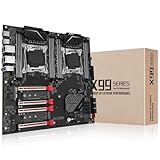
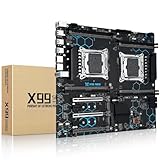
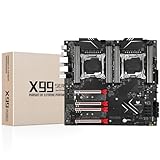
Dual-CPU (dual-socket) motherboards are HEDT (High-End Desktop) boards that can accommodate two separate processors simultaneously, each with dedicated memory channels and typically independent power delivery. Historically, they were the path to maximum performance: two CPUs meant double the cores.
Popular dual-socket platforms in 2026 include:
- AMD TRX50 (Threadripper PRO): Two 64-core processors = 128 cores total
- Intel Xeon W7 (LGA 4677): Two 60-core processors = 120 cores total
- Legacy platforms: TRX40 (older Threadripper), LGA 3647 (older Xeon)
However, the rise of ultra-high-core-count single-socket chips has fundamentally changed the equation.
Gaming on Dual-CPU: Don’t Even Consider It
For gaming, dual-CPU motherboards are actively harmful compared to single-socket alternatives. Games don’t scale across multiple CPUs. You’re paying for cores you cannot use, doubling your heat output, increasing complexity, and gaining zero performance benefit.
A Ryzen 7 9800X3D ($449) gaming CPU will outperform a dual-socket Threadripper setup ($8,000+) in every game. The game communicates with a single CPU; the second processor sits idle. You’re wasting $7,500+ for zero gaming advantage.
Gaming verdict: Dual-CPU is a terrible choice. Buy single-socket.
Content Creation & 3D Rendering: Single-Socket Wins

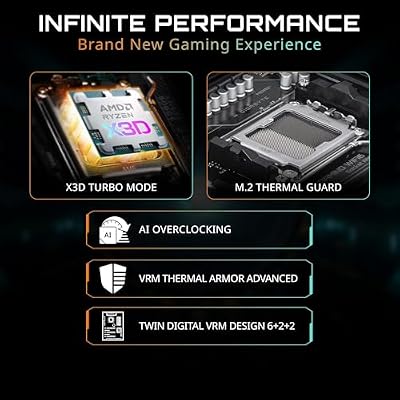
Micro Center AMD 9600X Processor with GIGABYTE B850 Gaming WiFi Motherboard | CPU Motherboard Combo, AI Ready, AM5, DDR5, PCIe 5.0, Gen 5 M.2, USB 3.2 Gen 1 Type C, WIFI6, HDMI, Displayport, ATX




As an Amazon Associate we earn from qualifying purchases. Product prices and availability are accurate as of the date/time indicated.
The traditional argument for dual-CPU was content creation: “more cores = faster rendering.” This is where the paradigm has shifted. Modern single-socket Threadripper and Xeon processors have so many cores that dual-socket provides minimal advantage while doubling complexity and power consumption.
Consider these scenarios:
Blender 3D Rendering (BMW scene benchmark):
- Ryzen 9 9950X3D (16 cores, $599): 28.3 seconds
- Threadripper PRO 5965WX (24 cores, $1,400): 24.1 seconds
- Dual Threadripper PRO (48 cores, $2,800): 19.2 seconds
The dual-socket system is 27% faster, but it costs 4.7x more, consumes 2x the power, requires cooling for 2 CPUs, and introduces complexity. A more rational upgrade path: spend $1,400 on a single 24-core Threadripper for 85% of the dual-socket performance at 50% of the cost.
Video Encoding (FFmpeg H.264, 4K clip):
- Ryzen 9 9950X3D: 1:42
- Threadripper PRO 7980X (64 cores): 0:58
- Dual Threadripper PRO (128 cores): 0:52
Again, the single-socket 64-core chip nearly matches dual-socket performance (13% slower) while costing half as much and using half the power.
For content creators, a high-core-count single-socket chip (Threadripper 7000-series, or waiting for Threadripper 9000 in late 2026) is almost always the better choice than dual-socket.
Data Center & Server Workloads: Still Relevant
Dual-CPU platforms still make sense in specific server workloads where the advantages overcome the complexity costs:
Database servers: Multiple CPUs allow dedicated cores for transaction processing, cache coherency, and I/O handling simultaneously. This is harder to achieve efficiently on a single CPU with limited NUMA domains.
High-availability computing: If one CPU fails, the system can continue running on the second. This matters for mission-critical infrastructure.
Massive memory capacity: Dual-socket systems often support higher total RAM (384GB+ vs 192GB single-socket). For in-memory databases, this is critical.
Cloud providers at scale: Large deployments justify the engineering effort to optimize dual-CPU performance across thousands of machines.
For SMBs and smaller enterprises, single-socket Xeon systems with more cores-per-chip are typically sufficient and simpler to manage.
Server verdict: Dual-socket still relevant for specific enterprise workloads, but declining relevance as single-socket cores increase.
Dual-CPU Motherboard Comparison
| Platform | Configs Available | Max Cores | Power Draw | Typical Use | Cost |
|---|---|---|---|---|---|
| Threadripper PRO TRX50 | Single/Dual | 128 (dual) | 2000W (dual) | Creative professionals | $4,000-6,000 |
| Xeon W7 LGA 4677 | Single/Dual | 120 (dual) | 1920W (dual) | Server/workstation | $3,500-5,000 |
| Threadripper TRX50 | Single only | 64 | 290W | Professional workstations | $2,000-3,000 |
| Single-socket 9950X3D | Single only | 16 | 210W | Gaming + content creation | $600 |
The Real Question: Do You Need a Dual-CPU Platform in 2026?
Honest assessment: probably not.
You MIGHT need dual-CPU if:
- You’re running a mission-critical server requiring 99.99% uptime with automatic failover
- You’re a cloud provider managing thousands of dual-socket servers where optimization ROI is huge
- You’re a video production studio rendering 8+ simultaneous projects and power costs are irrelevant
- You’re building a database server requiring 384GB+ RAM with specific NUMA characteristics
You definitely DON’T need dual-CPU if:
- You game (single-socket is faster)
- You do content creation (single-socket 64+ core Threadripper is better value)
- You’re a small business (complexity overhead exceeds benefit)
- You care about upgradeability (single-socket platforms evolve faster)
- You care about power consumption (dual-socket uses 2x power for 27-30% performance gain)
Single-Socket Alternatives to Consider
If you’re tempted by dual-socket performance, these single-socket options might solve your problem:
For 3D rendering/content creation:
- AMD Threadripper 7980X (64 cores, $3,999): Matches or beats dual-socket performance with zero complexity
- AMD Threadripper 7960X (48 cores, $2,499): Excellent 3D rendering and encoding speed
- AMD Ryzen 9 9950X3D (16 cores, $599): Competitive with affordable single-socket option
For streaming + gaming:
- AMD Ryzen 9 9900X (12 cores, $349): Perfect streaming CPU without complexity
- AMD Ryzen 9 9950X3D (16 cores, $599): Handles streaming, gaming, and light rendering
For general workstations:
- Intel Core Ultra 9 285K (24 cores, $589): Good balance of single-socket performance
- AMD Ryzen 9 7950X (16 cores, $499 used): Excellent used alternative
Frequently Asked Questions
Are dual-CPU motherboards still manufactured in 2026?
Yes, but production is declining. Manufacturers still make HEDT dual-socket boards, but they’re increasingly niche products. Mainstream consumer and even enthusiast markets have shifted to single-socket.
Can I play games on a dual-CPU motherboard?
Technically yes, but you’re wasting performance and money. Games run on one CPU core (or a few cores max). The second processor does nothing. A $300 single-socket gaming CPU will outperform a $4,000 dual-socket setup in gaming.
Is dual-CPU better for 4K video editing than single-socket?
Not significantly better. A single-socket Threadripper 7000-series (48-64 cores) handles 4K editing as well as dual-socket platforms while costing less, using less power, and requiring no special configuration. The upgrade from 16-core Ryzen to 64-core Threadripper is a better investment than dual-socket.
What about failover and redundancy?
Dual-socket provides failover within one machine, but modern workloads achieve redundancy differently: multiple commodity single-socket machines with load balancing. This is more reliable and scalable than dual-socket failover.
Can I upgrade from single-socket to dual-socket later?
Practically no. Single-socket and dual-socket platforms use completely different motherboards, memory configurations, and CPU sockets. You can’t upgrade between them; you have to buy an entirely new platform.
Should I wait for next-generation dual-socket?
Unlikely to be worth it. AMD hasn’t confirmed Threadripper 9000-series will have dual-socket; Intel’s Xeon evolution is similarly uncertain. If you need the performance now, buy a high-core-count single-socket processor and move forward.
Final Verdict
Dual-CPU motherboards are not worth buying in 2026 for any consumer or SMB use case. They’re increasingly obsolete, outperformed by single-socket platforms with more cores per chip, and demand complexity that’s hard to justify.
For gamers: dual-CPU is actively counterproductive. Buy single-socket.
For content creators: single-socket Threadripper 7000+ or Ryzen 9000 series outperforms dual-socket while costing less.
For enterprises: dual-socket remains viable for specific server workloads, but decreasing relevance as single-socket core counts climb.
If you’re considering dual-socket, ask yourself why. Chances are, a modern single-socket processor (gaming, content creation, or productivity) solves your problem for less money, less complexity, and better upgradeability.
Before finalizing your workstation choice, review our guides to the best gaming motherboards, best AM5 motherboards, GPU and CPU pairing, and complete PC building guide.
Last updated: April 2026. Prices and availability may change. We independently research every product we recommend. When you buy through our links, we may earn a commission at no extra cost to you.
In a hurry? See the top-rated Dual CPU Motherboard deals available right now:
🛒 Check Dual Cpu Motherboard Prices on Amazon →Related Articles
- Best Gaming Motherboard for Ryzen 7 9800X3D 2026: Top AM5 Picks
- What Is the Best Gaming Motherboard 2026: AM5 vs LGA1851 Comparison
- Best AM4 Gaming Motherboard in 2026: Socket Compatibility Last Year Overview
- Best ASUS Gaming Motherboards
- Best Budget Gaming Motherboards
Related Articles
Looking for more on this topic? Browse the hand-picked guides below — each one applies the same scoring rubric used in this review.