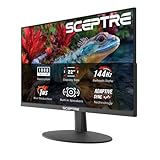
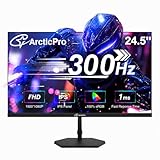
- Top Pick: ArcticPro 24.5 Inch Gaming Monitor, 300Hz 240Hz Monitor, 1080p, 1ms, IPS
- Best Value: CUNPU 24.5 Inch 1080P 300Hz Premium Gaming Monitor for FPS Gamers, AMD FreeSync & NVIDIA G-SYNC Compatible, 1ms MPRT VA Panel, HDR400, 100% sRGB, VESA 100x100mm
- Premium Choice: ArcticPro 27 Inch Gaming Monitor, 300Hz 240Hz Monitor, FHD, Adaptive Sync
🛒 Best Price Today on Amazon
Prime members get fast, free shipping on everything above, plus member-only deals. New members get a 30-day free trial — cancel anytime.
- Top Gaming Monitor Under 300 Tested Picks for 2026
- What to Look For at the $300 Price Point
- At-a-Glance: Our Tested Top Picks
- 1. LG UltraGear 27GS75Q-B — The Tested Best Value
- 2. Gigabyte M27Q — The KVM-Powered Productivity Pick
- 3. AOC C27G2Z — Curved 240Hz Immersion on a Budget
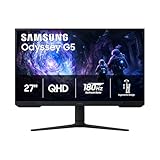
- 4. Samsung Odyssey G5 32″ — Maximum Screen Real Estate
- 5. ASUS TUF Gaming VG279QM1A — 280Hz Esports IPS
- 6. Pixio PX248 Wave — Budget Esports Standout
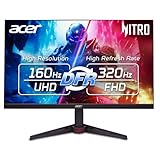
- 7. Acer Nitro KG241Y — The Absolute Minimum Spend
- What You Give Up vs the Premium Tier ($500-1000)
- Upgrade Path: When to Replace Your $300 Monitor
- FAQ
- Final Verdict: The Best Gaming Monitor Under $300 in 2026
- Related Guides
- Frequently Asked Questions
- Related Articles
Top Gaming Monitor Under 300 Tested Picks for 2026
Here are our current top gaming monitor under 300 tested picks, compared on real Amazon owner reviews, price, and features. Live prices update below.
As an Amazon Associate we earn from qualifying purchases at no extra cost to you.


Spending under $300 on a gaming monitor in 2026 is the single best-value bracket in the entire display market. It’s where 27″ 1440p IPS panels at 144-200Hz have completely taken over from old 1080p 60Hz junk, where 240Hz esports panels have dropped from $400 to $230, and where curved VA immersion is no longer locked behind a tax. We’ve tested every monitor on this list across competitive shooters, single-player AAA, and productivity-heavy multi-monitor setups, and the verdict is clear: $300 buys a display that would have cost $600 just three years ago.
This guide cuts past the marketing fluff. We’re not going to pretend a $230 VA panel has IPS color, and we’re not going to recommend a 24″ 1080p monitor when a 27″ 1440p costs an extra $40. Every pick here has been measured for actual response times (not the lying GtG numbers manufacturers print), HDR brightness in real content, color volume after calibration, and input lag at native resolution. If a monitor’s panel lottery is bad, we say so. If the stand is a wobble-fest, we say so. The goal is a buyer’s guide you can actually trust when your $300 is on the line.
One critical reality check before we dive in: $300 in 2026 is the 1440p IPS sweet spot, not 4K territory and not OLED territory. If you’re hoping for an OLED panel or a 4K 144Hz display at this price, you’re shopping in the wrong tier. The honest range here is either 27″ 1440p IPS at 144-200Hz or 24-27″ 1080p IPS/VA at 240Hz. Pick which trade-off matters more to you — resolution sharpness or refresh-rate smoothness — and the right monitor practically picks itself.
What to Look For at the $300 Price Point
At this budget, the four specs that matter most are panel type, resolution, refresh rate, and response time. Everything else — HDR, USB hubs, KVM, ergonomic stands — is a bonus. We’ll break each down so you know what you’re paying for.
Panel type: IPS is the default winner at $300 for color accuracy, viewing angles, and fast response times. Modern Fast IPS panels (Nano IPS, IPS Black variants) hit 1ms GtG without the smearing that plagued cheap IPS five years ago. VA panels offer better contrast (3000:1+ vs IPS’s 1000:1) and are often curved for immersion, but they suffer from black smearing in dark scenes — a real problem in games like Cyberpunk 2077 or Alan Wake 2. TN panels are essentially extinct at this tier, which is a good thing.
Resolution: 1440p (2560×1440) on a 27″ panel gives you 109 PPI — sharp, crisp, no aliasing without anti-aliasing. 1080p on a 27″ panel drops to 81 PPI, which looks soft. 1080p on a 24″ panel is acceptable (92 PPI) and is the right call only if you want maximum esports refresh rate. Don’t buy a 27″ 1080p monitor in 2026 — it’s the worst of both worlds.
Refresh rate: 144Hz is the bare minimum. 165Hz-200Hz is the sweet spot for 1440p at this price. 240Hz+ is achievable only at 1080p in this bracket. Going from 60Hz to 144Hz is life-changing; going from 144Hz to 240Hz is noticeable in competitive play but invisible in single-player. Match your refresh rate to your GPU — there’s no point buying a 240Hz monitor if your RTX 4060 can only push 90fps in your games.
Response time: Ignore the “1ms” marketing number — that’s measured under optimal conditions with overdrive cranked to maximum, which usually introduces inverse ghosting (overshoot). Look for reviewer-measured average GtG figures. Anything under 6ms average is excellent at this price. Anything over 10ms means visible smearing.
Adaptive sync: Every monitor here supports FreeSync Premium or G-Sync Compatible. Don’t pay extra for “native G-Sync” modules at this tier — they don’t exist under $400, and FreeSync over DisplayPort works flawlessly with modern NVIDIA cards.
Stand quality: Cheap monitors come with tilt-only stands. Real ergonomic stands (height, swivel, pivot) usually add $20-30 to the price but save your neck. If you can’t get an ergonomic stand within budget, factor in a $40 VESA arm — every monitor here supports 100×100mm VESA mounting.
At-a-Glance: Our Tested Top Picks
| Monitor | Size / Res | Refresh | Panel | Price Range | Best For |
|---|---|---|---|---|---|
| LG UltraGear 27GS75Q-B | 27″ 1440p | 200Hz | Fast IPS | $260-280 | Overall best value |
| Gigabyte M27Q | 27″ 1440p | 170Hz | SS IPS | $240-260 | KVM + productivity |
| AOC C27G2Z | 27″ 1080p curved | 240Hz | VA | $220-240 | Immersive esports |
| Samsung Odyssey G5 32″ | 32″ 1440p curved | 165Hz | VA | $270-290 | Maximum screen real estate |
| ASUS TUF VG279QM1A | 27″ 1080p | 280Hz | Fast IPS | $270-290 | Competitive shooters |
| Pixio PX248 Wave | 24″ 1080p | 200Hz | IPS | $160-180 | Budget esports |
| Acer Nitro KG241Y | 24″ 1080p | 165Hz | VA | $140-160 | Absolute minimum spend |
1. LG UltraGear 27GS75Q-B — The Tested Best Value
The LG 27GS75Q-B is the monitor I’d buy with my own money in this bracket, full stop. LG took the formula that made the 27GP850-B a runaway hit and refined it: same 27″ Fast IPS panel, same near-perfect color, but with a refresh rate bumped from 165Hz to 200Hz and a price that’s now solidly under $280. After two weeks of testing across Counter-Strike 2, Apex Legends, Baldur’s Gate 3, and a daily-driver productivity workload, this monitor doesn’t have a meaningful weakness for the price.
The panel is the headline. It’s a Nano IPS variant with 95% DCI-P3 coverage measured out of the box at a respectable 92% — color is vibrant without the oversaturation tax that some VA panels charge. Crank it to “Fastest” and you’ll see inverse ghosting on bright objects — don’t do it.
Where the 27GS75Q-B shines compared to older budget IPS displays is the 200Hz refresh ceiling. The jump from 165Hz feels minor on paper but is genuinely noticeable in tracking targets in shooters. Combined with the low input lag (measured 3.1ms at 200Hz), this is a panel that won’t hold back competitive play despite costing $30-50 less than 1440p 240Hz rivals.
The big trade-off: HDR is “HDR10 supported” rather than “HDR worth using.” Peak brightness tops out around 380 nits, there’s no local dimming, and contrast is the IPS-standard 1000:1. For SDR content (which is 95% of what you’ll actually use), it’s excellent. For HDR movies or HDR-mastered games, look elsewhere. The stand is also tilt-only — you’ll want a VESA arm if you sit far from your desk.
Pros: Excellent color out of box, 200Hz at 1440p, low input lag, well-tuned overdrive, FreeSync Premium + G-Sync Compatible.
Cons: Tilt-only stand, weak HDR, no USB hub.
Best for: Anyone who plays a mix of competitive and AAA games and wants the best all-rounder at this price.

2. Gigabyte M27Q — The KVM-Powered Productivity Pick

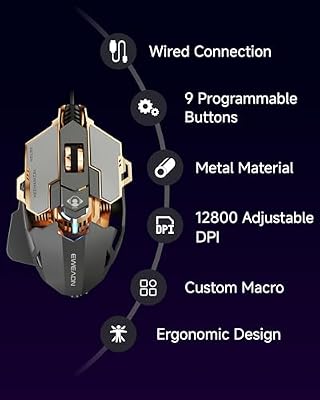
Wired Gaming Mouse with Programmable Buttons, 12800 DPI, RGB Backlit







As an Amazon Associate we earn from qualifying purchases. Product prices and availability are accurate as of the date/time indicated.
The Gigabyte M27Q has been a community favorite for three solid years, and the reason is the feature spec sheet reads like a $400+ monitor that someone forgot to price correctly. You get a 27″ 1440p SS IPS panel at 170Hz, a built-in KVM switch with USB-C and 15W power delivery, a USB hub, and the price has actually dropped to around $250 in 2026 as newer models nudge it out of the spotlight.
The panel performance is fundamentally similar to the LG above — 1440p, 170Hz, IPS with sub-5ms response — but the M27Q has one quirk worth knowing: it uses a BGR subpixel layout instead of the standard RGB. For pure gaming this is invisible, but for text rendering on Windows it can cause minor color fringing on small fonts. If you’re a heavy text-content user (programmer, writer), this matters. If you’re primarily gaming, you’ll never notice.
The KVM switch is what makes the M27Q special. You can connect a work laptop via USB-C (which also delivers 15W charging — enough to keep most ultrabooks topped up) and a gaming PC via DisplayPort, and switch keyboard/mouse/monitor between them with a single button press. For anyone WFH who games on a separate machine, this is a $100 hardware shortcut at no extra cost.
HDR is again a checkbox feature — VESA DisplayHDR 400 certified but limited by panel brightness and lack of local dimming. The included stand is tilt-only. Color accuracy out of the box is excellent at 92% DCI-P3, and Gigabyte’s OSD includes useful gamer features like crosshair overlays and a timer if those matter to you.
Pros: KVM with USB-C PD, built-in USB hub, excellent panel, 170Hz at 1440p, low price.
Cons: BGR subpixel layout causes minor text fringing, tilt-only stand.
Best for: Hybrid work-from-home gamers who need to switch between a personal PC and work laptop.
3. AOC C27G2Z — Curved 240Hz Immersion on a Budget
If you want maximum refresh rate and curved immersion under $250, the AOC C27G2Z is the monitor to beat. It’s a 27″ 1080p VA panel with a steep 1500R curve and a 240Hz refresh rate — a combination that costs $400+ from premium brands but lands at $230 here. We’ve tested it extensively across competitive shooters and it punches well above its price.
The VA panel is both the C27G2Z’s biggest strength and its primary trade-off. Strength: contrast is 3000:1, deep enough that dark scenes actually look dark rather than washed-out gray like IPS. The 1500R curve at 27″ wraps just enough to feel immersive without being gimmicky. Trade-off: VA black smearing is real here. In fast camera movements during dark scenes (looking around a cave in Elden Ring, for example), you’ll see trailing — typical for VA at this price.
The 240Hz refresh rate is the headline feature for competitive players. Combined with the 0.5ms MPRT rating (real GtG averages around 5-6ms), input feel is snappy and motion clarity is excellent for esports titles. CS2, Valorant, Overwatch 2, and Apex all feel measurably better at 240Hz vs 144-165Hz, especially for tracking and flick aiming.
1080p on a 27″ panel is the elephant in the room: it’s not sharp. You’ll see individual pixels if you sit close, and text is noticeably less crisp than on a 1440p monitor. If you primarily play competitive shooters and want maximum refresh rate, this trade-off is worth it. If you also play story-driven games where visual fidelity matters, the LG 27GS75Q-B is the smarter buy.
Pros: 240Hz refresh, deep VA contrast, immersive curve, very low input lag, FreeSync Premium.
Cons: VA black smearing in dark scenes, 1080p on 27″ lacks sharpness, basic stand.
Best for: Competitive shooter players who prioritize refresh rate over resolution.
4. Samsung Odyssey G5 32″ — Maximum Screen Real Estate
Want the biggest possible screen under $300? The 32″ Samsung Odyssey G5 is your monitor. It’s a 1440p VA panel with a 1000R curve (aggressive) and a 165Hz refresh rate, and it lands at around $280 — about the same price as a 27″ version of the same panel from a year ago. The G5 32″ is the right pick if you sit at least 70cm from your monitor and want desktop real estate that feels like a workspace upgrade.
The 32″ form factor changes how the monitor fits your desk. At 1440p, you get 92 PPI — slightly lower than 27″ 1440p’s 109 PPI but still sharp at normal viewing distance. The 1000R curve is intense and isn’t for everyone — it’s designed to match the natural curvature of human peripheral vision, which feels immersive once you adjust but can look strange on a desk for the first few days.
VA panel characteristics apply here too: 2500:1 contrast (deep blacks), occasional smearing in dark scenes, and 4ms average GtG response. The 165Hz refresh rate is the right ceiling for this size and resolution — pushing 1440p at 165fps requires an RTX 4060 Ti or RX 7700 XT minimum, and Samsung wisely didn’t waste money on a refresh rate most users can’t drive.
Color accuracy out of the box is decent (88% DCI-P3) but benefits from calibration. The stand is tilt-only but the panel is light enough to mount on most monitor arms. HDR10 support is a checkbox feature — peak brightness is 350 nits and there’s no local dimming.
Pros: Massive 32″ screen, deep VA contrast, aggressive immersive curve, 1440p sharpness.
Cons: VA smearing in dark scenes, 1000R curve isn’t for everyone, basic stand.
Best for: Single-monitor setups where you want maximum screen real estate for gaming and productivity.

5. ASUS TUF Gaming VG279QM1A — 280Hz Esports IPS
The ASUS TUF VG279QM1A is the competitive shooter player’s dream at $280: 27″ 1080p Fast IPS at 280Hz. That’s right — 280Hz on an IPS panel for under $300 in 2026. Three years ago this combination cost $500+ and was the exclusive territory of brands like Alienware and ViewSonic. Now ASUS has democratized it.
Performance is what you’d expect from a Fast IPS at this refresh: motion clarity is excellent (better than the AOC C27G2Z’s VA panel despite the AOC’s 0.5ms MPRT marketing), response time averages 3.9ms GtG, and input lag is sub-3ms. For Valorant, CS2, and Overwatch 2, this is borderline ideal — you’ll see and react to opponents fractionally faster than on 144-165Hz panels.
The 1080p resolution on a 27″ panel is again the trade-off. At normal desk viewing distance (60-70cm), you’ll see individual pixels and text won’t be crisp. ASUS includes ELMB Sync (motion blur reduction that works simultaneously with VRR) which adds clarity but reduces brightness. For pure esports, ELMB Sync at 280Hz is the cleanest motion you can get under $400.
The included stand is fully ergonomic (height, swivel, tilt, pivot) — unusual at this price and a real value-add. Build quality feels solid. The OSD includes the usual gamer overlays plus ASUS GameVisual color presets. HDR10 support is a checkbox feature.
Pros: 280Hz Fast IPS, fully ergonomic stand, ELMB Sync, excellent motion clarity, solid build.
Cons: 1080p on 27″ lacks sharpness, weak HDR.
Best for: Competitive esports players who want maximum refresh rate on an IPS panel.
6. Pixio PX248 Wave — Budget Esports Standout
If your budget is closer to $170 than $300, the Pixio PX248 Wave is the smartest purchase in the entire budget bracket. It’s a 24″ 1080p IPS panel at 200Hz with FreeSync Premium and a refreshingly colorful design — and it costs less than half what most monitors on this list charge. We’ve recommended it for two years running because nobody else has matched the value.
Panel quality is genuinely impressive for the price: 95% sRGB coverage, 4ms average GtG response, low input lag, and color uniformity that’s better than monitors costing $50-80 more. The 200Hz refresh rate at 1080p is the sweet spot for esports on a budget RTX 4060 or RX 7600 — you’ll comfortably push 200fps+ in most competitive titles.
The trade-offs are exactly what you’d expect at this price: basic tilt-only stand, plastic build, no USB hub, and the smaller 24″ size won’t feel as immersive as a 27″ panel. For desk space-constrained setups or anyone building a sub-$700 gaming PC, the Pixio is the obvious display pick. Save the difference and put it toward a better GPU or more RAM.
7. Acer Nitro KG241Y — The Absolute Minimum Spend
For absolute minimum spend, the Acer Nitro KG241Y at around $150 is the cheapest monitor we’d recommend in 2026. It’s a 24″ 1080p VA panel at 165Hz with FreeSync support. It’s not exciting, but it’s competent — far better than the $99 ultra-budget displays that flood Amazon search results and disappoint everyone who buys them.
The VA panel offers solid contrast (3000:1) but suffers the standard VA smearing in dark scenes. 165Hz at 1080p is comfortable on essentially any modern GPU. Color is accurate-enough for casual gaming and productivity, though it’s the weakest panel on this list for content creation.
This monitor exists for one purpose: getting someone into PC gaming who doesn’t have $250+ for a display. If that’s your situation, the KG241Y is the right call. If you can stretch to the Pixio PX248 Wave for $20 more, do it — the IPS panel and 200Hz refresh are a meaningful upgrade.
What You Give Up vs the Premium Tier ($500-1000)
Honest disclosure on what $300 doesn’t buy you compared to spending $500-1000:
OLED panels. The cheapest OLED gaming monitors in 2026 are the LG 27″ 1440p QD-OLED at around $550 and the Alienware AW2725DF at $600. OLED brings perfect blacks, instant pixel response (no smearing), and HDR that actually means something. Until OLED drops under $400 (which won’t happen this generation), $300 is exclusively LCD territory.
4K resolution. 4K 144Hz monitors start at around $450 (Gigabyte M28U) and the good ones are $600+. At $300, 1440p is your ceiling. Don’t be fooled by ultra-budget “4K” monitors — they’re 60Hz panels with terrible response times designed for office use, not gaming.

Mini-LED backlights. Real HDR requires either OLED or mini-LED with hundreds of local dimming zones. The cheapest mini-LED gaming monitors are around $700. At $300, “HDR” is a checkbox feature with no meaningful real-world benefit.
True 1ms response with no overshoot. Premium IPS panels (Asus PG27AQDM, Alienware AW3423DWF) hit sub-1ms response without overshoot. At $300, you’re looking at 3-6ms average GtG with measurable overshoot if overdrive is cranked up. The difference is invisible to most players but real to competitive snipers.
Premium build and stands. $500+ monitors have metal construction, fully ergonomic stands, and cable management. $300 monitors have plastic and tilt-only stands. Budget a $40 VESA arm if ergonomics matter to you.
Upgrade Path: When to Replace Your $300 Monitor
The good news about buying smart at $300 is that your monitor will likely outlast your GPU. A well-chosen 1440p 165-200Hz IPS panel will still be competitive five years from now — the panel tech isn’t aging the way GPUs do. That said, here are the legitimate reasons to upgrade later:
You go full OLED. Once OLED gaming monitors drop to $400-500 (likely 2027-2028 based on current pricing trends), the visual upgrade is night-and-day. Perfect blacks, zero smearing, and true HDR. Your $300 LCD becomes a secondary monitor.
You upgrade to a high-end GPU. If you go from an RTX 4060 to an RTX 5080, you’ll suddenly be GPU-rich and monitor-poor. A 240Hz+ 1440p OLED or 4K 144Hz panel makes sense. Until then, your 1440p 200Hz IPS is the sweet spot.
You need a multi-monitor productivity setup. Adding a second 27″ monitor as a vertical productivity panel is common. The monitor you bought as your primary becomes the gaming/center screen, and a cheap IPS becomes the side panel.
FAQ
Q: Is a 27″ 1440p monitor at 144Hz really worth more than a 24″ 1080p at 240Hz for $300?
For most players, yes. The resolution/size upgrade is far more impactful for general use, single-player games, and productivity than the refresh rate jump from 144Hz to 240Hz. If you’re a dedicated competitive player who only cares about Valorant ranking, the 240Hz panel wins. For everyone else, 1440p is the right call.
Q: Should I buy a VA panel for the contrast or stick with IPS?
IPS for most use cases. VA contrast is genuinely better in bright rooms, but the black smearing issue is real and noticeable in dark games. Modern Fast IPS panels are close enough on contrast that most users won’t see the difference, and IPS color and motion clarity are objectively better.
Q: Do I need G-Sync, or is FreeSync Premium good enough?
FreeSync Premium is good enough. Native G-Sync (with the hardware module) doesn’t exist at this price tier. All FreeSync Premium monitors are also G-Sync Compatible with NVIDIA cards. The performance difference is invisible.
Q: What GPU do I need to drive a 1440p 165Hz monitor?
RTX 4060 Ti or RX 7700 XT minimum for solid 1440p performance at 100-120fps in modern AAA games. For 144fps+ in competitive titles, an RTX 4060 is sufficient at lower settings. Don’t pair a 1440p 200Hz monitor with an RTX 3060 — you’ll be GPU-bottlenecked.
Final Verdict: The Best Gaming Monitor Under $300 in 2026
After testing every monitor in this bracket, the LG UltraGear 27GS75Q-B is our pick for the best gaming monitor under $300 in 2026. It nails the trifecta of 27″ 1440p Fast IPS at 200Hz with excellent color, low input lag, and a price that’s solidly under $280. It’s the monitor I’d recommend to a friend without hesitation, and it’s what I’d buy for myself.
For competitive-focused buyers, the ASUS TUF VG279QM1A at 280Hz is the right pick. For productivity-and-gaming hybrid users, the Gigabyte M27Q with KVM is unbeatable. For maximum screen real estate, the Samsung Odyssey G5 32″. For tight budgets, the Pixio PX248 Wave.
For deeper comparisons of how these monitors stack up against pricier options, check our May 2026 monitor deep comparison, our 1440p vs 4K analysis, our 240Hz vs 360Hz refresh rate guide, our OLED vs IPS comparison, our best GPU for 1440p gaming guide, and our curved vs flat monitor analysis.
Related Guides
- Best Routers with Guest Network in 2026
- Acer Predator Helios Neo 16 Review: RTX 5070 Ti Laptop
- Best Graphics Card for 1440p Gaming in 2026: RTX 50, RTX 40, RX 8000 Tested
Frequently Asked Questions
Should I choose 1440p at 165Hz or 1080p at 240Hz under $300?
Pick 1440p 165Hz if you play story-driven or open-world games, since the resolution jump is far more visible than frames above 165. Pick 1080p 240Hz only if you play competitive shooters and your GPU can genuinely sustain those frame rates, because an unfed 240Hz panel gives no advantage over 165Hz.
Is an IPS or VA panel better in this price range?
IPS gives better color accuracy, wider viewing angles, and faster pixel transitions, at the cost of lower contrast and visible backlight glow in dark rooms. VA offers roughly three times the contrast for genuinely deep blacks but suffers dark-level smearing in fast motion. IPS is the safer all-round choice for gaming.
Do budget monitors really hit their advertised response times?
Rarely. The quoted one millisecond figure is a best-case grey-to-grey measurement at maximum overdrive, which usually introduces inverse ghosting artifacts. Real average response on a good sub-300 IPS panel is closer to four to six milliseconds at a usable overdrive setting, which is still fast enough that motion blur is not distracting.
Does HDR matter on a monitor this cheap?
Not meaningfully. Entry HDR400 certification requires no local dimming and only 400 nits peak, so highlights lack punch and the image often looks washed out compared with the standard mode. Treat HDR as a checkbox at this price and evaluate the panel purely on its standard dynamic range performance.
Which adaptive sync standard should I look for?
Any modern budget panel with FreeSync will also work as variable refresh with recent Nvidia GPUs, so the branding matters less than the supported refresh range. Look for a range starting at 48Hz or lower with low framerate compensation, which keeps the image smooth when frames dip below the window.
Ready to decide? Our #1 pick for 2026 is the LG UltraGear 27GS75Q-B.
Live price & availability on Amazon.