

- Top Pick: Razer Kiyo V2 X Webcam for Streaming and Meetings, 1440p 60 FPS, Black
- Best Value: NexiGo N660P Pro 4K Webcam with Distortion-Free Lens, 1080p 60 fps Autofocus USB Streaming Camera, 3DNR, Noise-Canceling Mics & Privacy Cover, Web Cam for Gaming/Live Streaming/PC/Mac/Switch 2, Black
- Premium Choice: NexiGo N660P 1080P 60FPS Webcam with Software Control, Dual Microphone & Cover, Autofocus, HD USB Computer Web Camera, for OBS/Gaming/Zoom/Skype/FaceTime/Teams/Twitch
Affiliate disclosure: As an Amazon Associate we earn from qualifying purchases. This post contains affiliate links — if you buy through them we may earn a small commission at no extra cost to you. This never affects our recommendations.
- Gaming Webcam PoE: AVerMedia PW515 Power over Ethernet for Professional Streaming Setups
- What Is Power over Ethernet (PoE) and Why It Matters for Streaming
- AVerMedia PW515 PoE: 1440p@60fps Streaming Camera
- PoE Streaming Camera Setup: Technical Requirements
- PoE Webcam vs. Standard USB: Comparison
- When to Choose PoE Streaming Cameras
- Building a Professional PoE Streaming Setup
- Streaming Optimization with PoE Cameras
- FAQ: Power over Ethernet Streaming Cameras
- Integration with Your Gaming PC
- Pro Tips for PoE Streaming Camera Success
- Conclusion: PoE for Professional Streaming Setups
- Related Articles
- Frequently Asked Questions
- Related Articles
🛒 Best Price Today on Amazon
Prime members get fast, free shipping on everything above, plus member-only deals. New members get a 30-day free trial — cancel anytime.
Start 30-Day Prime Free Trial →See Today’s Amazon DealsGaming Webcam PoE: AVerMedia PW515 Power over Ethernet for Professional Streaming Setups
Professional streaming setups demand flexibility. Your camera might need to mount 15 feet from your desk on a boom arm or suspended from a ceiling rig. Running separate power and USB cables creates cable clutter and infrastructure nightmares. The AVerMedia PW515 Power over Ethernet (PoE) variant solves this elegantly: one Ethernet cable delivers both data and power, eliminating cable management headaches while maintaining pristine 1440p@60fps streaming quality.
This guide explores the AVerMedia PW515 PoE variant, explains when PoE streaming cameras make sense, and shows you how to build a professional cable-managed streaming setup.

Anker PowerConf C200 2K Webcam for PC/Laptop/Mac, Low-Light Correction | Conference Microphone, 360° Voice Coverage, Smart Voice Enhancement, Powerful Sound, Desktop PC Speaker, Online Meetings

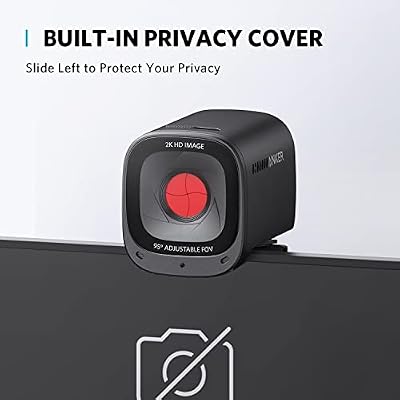


As an Amazon Associate we earn from qualifying purchases. Product prices and availability are accurate as of the date/time indicated.
In a hurry? See the top-rated Gaming Webcam PoE deals available right now:
🛒 Check Gaming Webcam Poe Prices on Amazon →What Is Power over Ethernet (PoE) and Why It Matters for Streaming
Power over Ethernet is a technology that delivers electrical power through Ethernet cables alongside data transmission. Instead of needing two separate cables (one for power, one for data), PoE webcams need only one.
Benefits for Streaming Setups
In a traditional streaming setup, your webcam sits on your monitor, connected via USB and USB power. Simple. But if you want to mount your camera on a monitor arm, a ceiling rig, or a boom stand, you need cable runs that can span 10-20 feet. Managing separate power and USB cables over long distances is messy and unprofessional.
With PoE, one Ethernet cable does everything. It’s thinner, more flexible, and cable managers love it. Your streaming rig looks professional and organized instead of a rat’s nest of wires.
PoE for Mobile and Remote Streaming
If you attend gaming events, LAN parties, or remote streaming locations, PoE simplifies your setup. You bring one Ethernet cable and an injector, and you’re ready to broadcast from anywhere with network access.
Infrastructure Scalability
Professional streaming studios often install ethernet infrastructure throughout their facilities. Adding a PoE camera is as simple as running one cable to the location. No additional power outlets needed.
AVerMedia PW515 PoE: 1440p@60fps Streaming Camera
The AVerMedia PW515 PoE variant maintains the same excellent 1440p@60fps performance as the standard USB version, with the added benefit of single-cable connectivity.
1440p Resolution at 60fps
The PW515 PoE captures 2560×1440 resolution at a smooth 60fps. This delivers significantly more detail than 1080p while remaining practical for mid-to-high-end gaming rigs. Whether you’re streaming competitive gaming, creative content, or reaction streams, 1440p@60fps is the professional standard.
Single Ethernet Cable Connection
PoE eliminates dual-cable management. Your camera connects to a PoE-enabled switch or PoE injector with one Ethernet cable. Power delivery is automatic—no separate power adapter, no USB power brick.
115-Degree Field of View
The wide field of view captures your face and gaming environment naturally. You can show off your RGB setup, posters, or streaming décor without awkward wide-angle distortion. The lens is well-corrected, minimizing barrel distortion at the edges.
Autofocus Performance
The PW515 uses rapid contrast-detection autofocus. It tracks your movement during gaming streams, keeping your face sharp regardless of how much you move. Focus adjustments are smooth and imperceptible to viewers.
Low-Light Capability
The PW515 handles dimly lit environments better than budget webcams. While not quite matching the Razer Kiyo Pro’s low-light prowess, it performs admirably in gaming rooms lit only by monitor glow and ambient lighting.
Professional-Grade Build
The PoE variant is built for professional environments. The housing is durable, the mount is secure, and the optical path is carefully engineered for consistent image quality. This isn’t a consumer camera; it’s built for broadcast reliability.

Razer Kiyo Pro Webcam for Streaming, Gaming, Video Calls: Full HD 1080p 60FPS - Adaptive Light Sensor - HDR Enabled - Wide Angle Lens with Adjustable FOV - Works with OBS, Xsplit, Twitch, Zoom, Teams


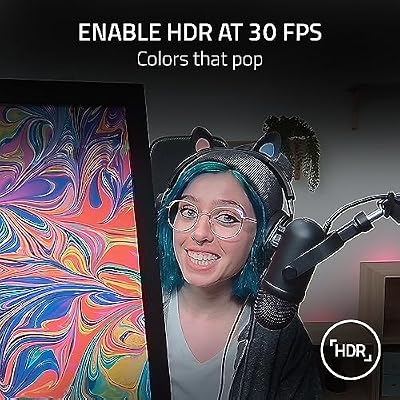


As an Amazon Associate we earn from qualifying purchases. Product prices and availability are accurate as of the date/time indicated.
PoE Streaming Camera Setup: Technical Requirements
PoE Injector or PoE Switch
Your network switch must support Power over Ethernet (802.3af or higher). If your switch doesn’t have PoE, you need a PoE injector—a small device that sits between your standard switch and the camera, injecting power into the Ethernet cable.
Budget PoE injectors cost $20-40 and are perfectly adequate for a single camera. Enterprise PoE switches cost more but support multiple PoE devices simultaneously.
Ethernet Cable Specifications
Use Cat5e or Cat6 Ethernet cable. For cable runs over 100 feet, Cat6 is recommended to minimize signal degradation. PoE works over standard Ethernet cables—you don’t need special wiring.
Network Bandwidth
The PW515 PoE streams at the same bitrate as the USB version: 1440p@60fps requires 50-100 Mbps of network bandwidth depending on codec and quality settings. Ensure your network has adequate bandwidth. Gigabit Ethernet (1000 Mbps) provides plenty of headroom.
Power Budget
The PW515 PoE draws power compliant with 802.3af standard (up to 15.4W). Most PoE injectors and switches support this without issues. Verify your PoE equipment supports at least 30W budget to be safe.
PoE Webcam vs. Standard USB: Comparison
| Feature | AVerMedia PW515 PoE | AVerMedia PW515 USB | Razer Kiyo Pro | Logitech Brio 500 |
|---|---|---|---|---|
| Resolution | 1440p @ 60fps | 1440p @ 60fps | 1080p @ 60fps | 4K @ 30fps |
| Connection | Ethernet (PoE) | USB 3.0 | USB 3.0 | USB 3.0 |
| Power Delivery | Via Ethernet | USB Bus | USB Bus | USB Bus |
| Cable Run Distance | 100m+ (Ethernet) | 16-20ft (USB) | 16-20ft (USB) | 16-20ft (USB) |
| Autofocus | Yes (Contrast) | Yes (Contrast) | Yes (Contrast) | Yes (Contrast) |
| Low-Light | Good | Good | Excellent | Excellent |
| Field of View | 115° | 115° | 80° | 90° |
| Price | $$$ | $$ | $$ | $$$ |
The PoE variant costs more than standard USB but saves substantially on infrastructure and cable management. For professional setups, the premium is justified.
When to Choose PoE Streaming Cameras
Choose PoE If You Have
- A permanent streaming studio with installed Ethernet infrastructure
- Multiple cameras that need to span long distances
- A clean, cable-managed aesthetic priority
- Network switches with PoE support (or budget for a PoE injector)
- A professional streaming setup where cable management matters
- Plans to move your camera location frequently without re-running power cables
Stick with Standard USB If You Have
- A simple desktop setup with camera on monitor
- No PoE infrastructure and no budget for injectors
- A dynamic streaming setup that changes locations frequently
- A compact space where cable runs are minimal (under 10 feet)
Building a Professional PoE Streaming Setup
Network Infrastructure
Start with a gigabit-capable switch (100+ Mbps minimum, 1000 Mbps gigabit recommended). If your switch has PoE ports, connect the camera directly. If not, use a PoE injector between your switch and camera.
Cable Management Plan
Run Ethernet cables along walls, under desks, or through cable trays. Use labeled cable ties to organize runs. The single Ethernet cable is dramatically cleaner than separate power and USB cables.
PoE Injector Placement
If using a PoE injector, position it close to your network switch or centrally in your setup. The injector sits between the non-PoE switch port and the camera’s Ethernet cable, seamlessly adding power to the data transmission.
Backup Power Consideration
If your streaming setup requires uptime during power fluctuations, consider a UPS (Uninterruptible Power Supply). The PoE injector itself should be on UPS backup to prevent camera drops during brief power dips.
Remote Monitoring
Some professional PoE cameras support SNMP or web-based monitoring. You can check camera health, reboot remotely, and monitor power consumption. Verify if the PW515 PoE supports these features.
As an Amazon Associate we earn from qualifying purchases at no extra cost to you.




Streaming Optimization with PoE Cameras
Network Stability
PoE cameras are only as good as your network infrastructure. Ensure your Ethernet infrastructure is stable and your switch is properly configured. No packet loss, no latency spikes. Test your network with tools like iperf before broadcasting.
Bitrate Selection
1440p@60fps over Ethernet allows you to stream at higher bitrates than USB would support. You can use bitrates up to 20 Mbps if your upload speed allows, delivering exceptionally high-quality video.
Redundancy Planning
Professional streaming studios often have redundant cameras. If your main camera fails, a backup immediately takes over. With PoE, swapping cameras is as simple as unplugging one Ethernet cable and plugging in another.
FAQ: Power over Ethernet Streaming Cameras
Q: Can I use PoE for streaming if my switch doesn’t have PoE ports?
Yes. Use a PoE injector ($20-40). The injector sits between your non-PoE switch port and the camera cable, injecting power into the Ethernet signal. It works seamlessly.
Q: How far can I run a PoE Ethernet cable?
Ethernet standards support up to 100 meters (328 feet) for reliable data transmission. PoE power delivery is typically rated to about 100 meters as well, though longer runs experience voltage drop. For camera streaming, stick to under 100 meters.
Q: Will PoE affect video quality compared to USB?
No. PoE and USB are transmission mediums for data. The video quality depends on the camera sensor and codec, not the cable type. The PW515 PoE delivers identical 1440p@60fps quality to the USB version.
Q: Can I use a standard Ethernet switch with PoE cameras?
Yes, with a PoE injector. A standard switch isn’t PoE-capable, but the injector adds power to the signal, so the camera works fine. Most setups use injectors rather than premium PoE switches.
Q: What happens if the PoE connection drops?
The camera loses power and the stream cuts. This is why professional setups use UPS backup on PoE injectors and have redundant cameras. For mission-critical streaming, reliability planning is essential.
Professional Streaming Studio with PoE Cameras
Multi-Camera Setup: Professional studios often use multiple cameras—one for face cam, one for gameplay overlay, one for supplemental angles. PoE allows all cameras to connect via a single infrastructure.
Centralized Management: All cameras draw power and data through a central PoE switch. Adding or removing cameras requires only Ethernet connections, no additional power outlets or dedicated circuits.
Clean Aesthetic: Professional streaming studios prioritize visual cleanliness. PoE eliminates visible power cables and USB adapters, creating a broadcast-ready environment.
Scalability: PoE infrastructure scales easily. As your streaming setup grows, you add cameras by running Ethernet cables, not hunting for available power outlets.
Integration with Your Gaming PC
Your PoE camera connects to your network, not directly to your gaming PC. Network video capture in OBS requires the camera to be visible on your network. Ensure your camera and PC are on the same network segment, or route traffic appropriately if they’re on different VLANs.
For complete streaming PC recommendations, check our best gaming PC for streaming guide. For network optimization, read our best router for gaming and streaming guide to ensure your network infrastructure supports professional streaming.
For CPU and GPU planning, our best CPU for gaming and streaming guide covers encoding requirements for 1440p@60fps streaming.
Pro Tips for PoE Streaming Camera Success
Test Network First: Before mounting your camera, test the Ethernet run for signal quality. Use network testing tools to verify connectivity and latency.
Label Everything: Label both ends of Ethernet cables. Professional setups have dozens of cables. Clear labeling saves hours of troubleshooting.
Budget for Injector: If your switch lacks PoE, budget $30-50 for a quality PoE injector. Cheap injectors sometimes fail—avoid bottom-tier products.
Plan Cable Routes: Map out cable runs before installation. Use cable trays, conduit, or channels to keep cables organized and protected from damage.
Backup Infrastructure: Professional setups have redundant switches and PoE injectors. If your main PoE injector fails, a backup immediately takes over.
Conclusion: PoE for Professional Streaming Setups
The AVerMedia PW515 PoE variant is for serious streamers building professional-grade setups. The single-cable Ethernet connection eliminates cable clutter while delivering reliable 1440p@60fps video. If you’re investing in infrastructure, PoE is the future-proof choice.
For complete streaming rig planning, read our best gaming setup 2026 guide and our best streaming setups for gaming for real-world examples of professional PoE-based streaming studios.
Ready to build a professional streaming infrastructure? Start with our gaming PC build guide and our best gaming streaming PC recommendations for complete hardware planning.
Related Articles
Looking for more on this topic? Browse the hand-picked guides below — each one applies the same scoring rubric used in this review.
Frequently Asked Questions
What is the benefit of a Power over Ethernet camera for streaming?
PoE carries power and data over one Ethernet cable, so a camera can sit ten or more metres away with a single tidy run instead of USB plus a separate power adapter. That solves long-distance placement, which USB struggles with beyond roughly five metres without active extension hardware.
Do I need a special switch to use a PoE camera?
You need either a PoE-capable network switch or a PoE injector placed between your ordinary switch and the camera. Injectors are inexpensive and fine for a single camera. Check the required power class, since a camera demanding 802.3at will not run properly from an older 802.3af source.
How does a PoE camera appear inside OBS?
It usually arrives as a network video source over NDI or RTSP rather than as a plug-and-play webcam device. In OBS you add a media or NDI source and point it at the camera address. This adds a small amount of latency compared with USB, typically manageable but worth testing before going live.
Is a PoE camera overkill for a single-desk streaming setup?
Usually yes. If the camera sits within a metre or two of the PC, a good USB webcam gives simpler setup, lower latency and instant recognition in every app. PoE earns its place in multi-camera studios, ceiling or wall mounts, and rooms where running one cable is far easier than two.
What lighting do I need to get the best image from it?
Any camera at this level rewards good light far more than higher resolution does. A soft key light at roughly 45 degrees in front, plus a dim backlight to separate you from the wall, will improve perceived quality more than upgrading sensors. Avoid overhead lighting alone, which casts unflattering shadows.






