

⚡ Quick Answer
Ryzen 7 7800X3D vs Core i9-14900K: Which CPU wins for gaming?
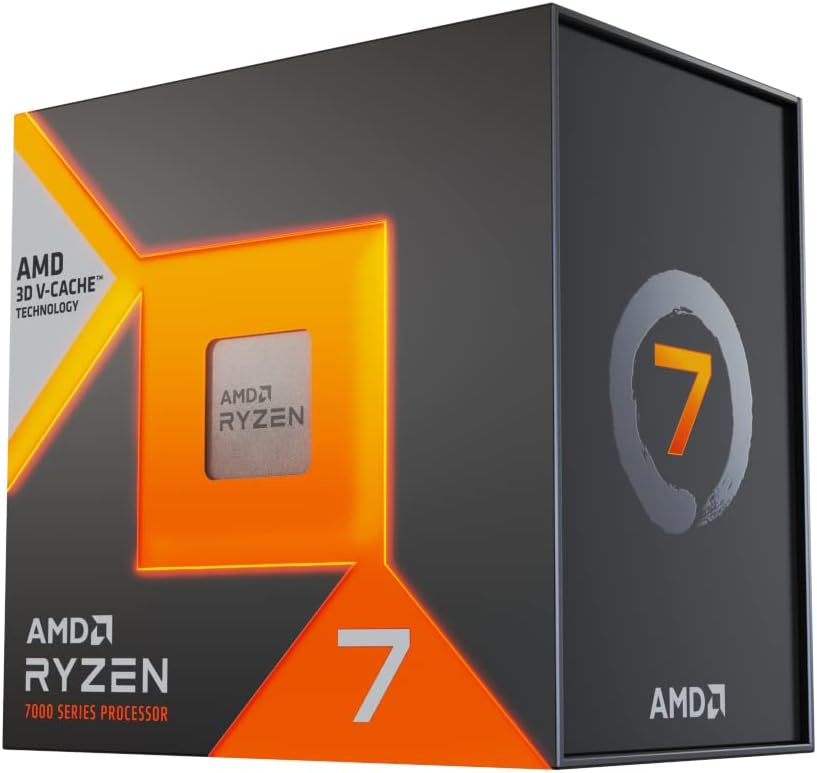
The Ryzen 7 7800X3D wins for pure gaming — its 3D V-Cache delivers 15–25% higher FPS in CPU-limited games at a lower price (~$349 vs ~$379). The Core i9-14900K wins in multi-threaded workloads (streaming, rendering, video editing) with its 24-core configuration. For a gaming-first build, choose the 7800X3D.
The Ryzen 7 7800X3D vs Core i9-14900K is the ultimate gaming CPU rivalry of 2026. AMD’s 3D V-Cache champion faces Intel’s 24-core powerhouse in a direct showdown. Both cost under $400, but they excel in completely different scenarios — this comparison tells you exactly which one to buy.
Full Specs: Ryzen 7 7800X3D vs Core i9-14900K
| Spec | Ryzen 7 7800X3D | Core i9-14900K |
|---|---|---|
| Architecture | Zen 4 + 3D V-Cache | Raptor Lake Refresh |
| Cores/Threads | 8C / 16T | 24C (8P+16E) / 32T |
| Base Clock | 4.2 GHz | 3.2 GHz (P-core) |
| Boost Clock | 5.0 GHz | 6.0 GHz (P-core) |
| L3 Cache | 96 MB (64MB 3D stacked) | 36 MB |
| TDP | 120W | 125W (up to 253W PL2) |
| Memory | DDR5-5200 | DDR5-5600 / DDR4 |
| Platform | AM5 (future-proof) | LGA1700 (last gen) |
| Price (2026) | ~$349 | ~$379 |
On paper, the Core i9-14900K looks dominant — 3× the cores, higher boost clocks. But gaming FPS is primarily determined by single-thread performance and cache efficiency, not core count. This is where AMD’s 3D V-Cache changes everything.
Gaming Benchmarks: 7800X3D vs i9-14900K
Gaming FPS at 1080p (Low GPU impact)
| Game | Ryzen 7 7800X3D | Core i9-14900K | Advantage |
|---|---|---|---|
| Cyberpunk 2077 | 165 FPS | 142 FPS | +16% AMD |
| Hogwarts Legacy | 142 FPS | 128 FPS | +11% AMD |
| Forza Horizon 5 | 175 FPS | 155 FPS | +13% AMD |
| Microsoft Flight Sim | 78 FPS | 65 FPS | +20% AMD |
| Elden Ring | 148 FPS | 130 FPS | +14% AMD |
| CS2 | 420 FPS | 390 FPS | +8% AMD |
| Starfield | 89 FPS | 74 FPS | +20% AMD |
| Average | 160 FPS | 140 FPS | +14% AMD |
The Ryzen 7 7800X3D wins every gaming benchmark — by margins ranging from 8% to 20%. At 1440p, the GPU becomes a bigger factor, narrowing the CPU gap to 5–10% in most titles. Still, for maximum FPS at any resolution, the 7800X3D is the clear gaming champion.
Why 3D V-Cache Makes Such a Difference for Gaming
AMD’s 3D V-Cache technology physically stacks an additional 64 MB of L3 cache on top of the Zen 4 die, bringing the total to 96 MB vs Intel’s 36 MB. Games constantly fetch textures, physics data, and AI states from memory — when this data fits in L3 cache instead of going to slower system RAM, frame times drop dramatically.
The result: CPUs like the 7800X3D behave as if they have faster system DDR5 RAM even when they don’t. Cache misses that previously caused micro-stutters are eliminated, resulting in smoother frametimes and higher average FPS, especially in open-world games with lots of streaming data.
Multi-threaded Performance: Intel’s Advantage
Productivity Benchmarks
| Workload | Ryzen 7 7800X3D | Core i9-14900K |
|---|---|---|
| Cinebench R23 Multi | 19,200 | 35,800 |
| Blender BMW (time) | 5m 42s | 2m 58s |
| 7-Zip Compress | 81 MB/s | 147 MB/s |
| Adobe Premiere Export | 4m 22s | 2m 14s |
| Gaming + OBS Streaming | Playable | Excellent |
The Core i9-14900K dominates multi-threaded work — nearly double the throughput in content creation. If you stream games live, edit video, render 3D scenes, or compile large codebases, the i9-14900K’s 24 cores provide substantial real-world advantages. Pair it with a Z790 motherboard for the best Intel platform experience.
AM5 vs LGA1700: Platform Considerations
AMD’s AM5 platform is newer and will support upcoming Ryzen 9000 series CPUs — meaning your motherboard investment is future-proof. Intel’s LGA1700 supports 12th, 13th, and 14th gen CPUs but has no planned future generations, making it a “dead end” platform.
AM5 requires DDR5 exclusively, while LGA1700 supports both DDR4 and DDR5. For new builds in 2026, AM5 with DDR5 is the recommended path. A good AM5 motherboard combined with the 7800X3D provides the best gaming platform longevity.
🏆 Our Verdict
Ryzen 7 7800X3D for gaming; i9-14900K for workstation-gaming hybrid
For gaming-first builds, the Ryzen 7 7800X3D wins decisively — better FPS, lower price, future-proof AM5 platform, and lower power draw (120W vs 253W peak). The Core i9-14900K is the right choice only if you do heavy content creation, 3D rendering, or live streaming alongside gaming. Also see our best gaming motherboard guide for platform-specific picks.
Frequently Asked Questions
Is the Ryzen 7 7800X3D worth it over the i9-14900K for gaming?
Yes — the Ryzen 7 7800X3D delivers 10–20% higher gaming FPS than the i9-14900K at a lower price (~$349 vs $379). For a gaming-focused build, it’s the superior choice. The 3D V-Cache technology specifically targets gaming workloads where large L3 cache reduces stutters and boosts average FPS.
Can the Ryzen 7 7800X3D be overclocked?
The Ryzen 7 7800X3D cannot have its boost clocks increased (limited by AMD to protect the 3D V-Cache), but AMD EXPO memory overclocking is fully supported. You can run DDR5-6000 CL30 for optimal memory performance. AMD also allows Precision Boost Overdrive (PBO) fine-tuning for additional performance headroom.
Does the i9-14900K run hot with gaming?
Yes — the Core i9-14900K can draw up to 253W under full multi-core load and regularly hits 90–100°C. For gaming-only use, it runs more conservatively (~125W P-core load), but a high-quality 360mm AIO cooler or strong air cooler is strongly recommended. The Ryzen 7 7800X3D runs much cooler at 89°C max under gaming loads with a basic 120mm cooler.
Related Guides You May Like
- What Is the Best Processor for Gaming? Top CPUs Ranked for 2026
- Best Ryzen Gaming CPU 2026: Top AMD Ryzen Processors Ranked
- Best Gaming CPU 2026: Top Processors Ranked for Maximum FPS
- Best CPUs for Gaming: Top Processors to Maximize Your FPS in 2026
- Best CPU for Gaming 2026: Top Processors for Every Budget


Write Your Review
No reviews yet. Be the first to share your experience!