- Top Pick: CHONCHOW Magnetic Cell Phone Cooler, RGB Phone Cooling Fan Portable Lightweight Mobile Phone Cooling Fan, Phone Radiator with Larger Cooling Area for Phone/Tablet/IPad (with Digital displays)
- Best Value: GameSir G8 Plus MFi iPhone Controller, Hall Effect Sticks
- Premium Choice: Megadream Wireless Mobile Gaming Controller Gamepad for iPhone/Android/iPad/PC/Switch/PS4/iPad Joystick with Phone Holder, Supported Cloud Game, Streaming on PS5/X-box, Turbo, Direct Play, iPhone 17
Affiliate disclosure: As an Amazon Associate we earn from qualifying purchases. This post contains affiliate links — if you buy through them we may earn a small commission at no extra cost to you. This never affects our recommendations.
iPads have evolved into legitimate gaming machines rivaling dedicated gaming laptops in raw performance. With the Apple M4 chip delivering desktop-class CPU and GPU power, and displays supporting 120Hz ProMotion, modern iPads deliver gaming experiences you couldn’t get five years ago. Whether you’re chasing competitive MOBA performance on Genshin Impact, exploring AAA-quality games like Baldur’s Gate 3, or casual gaming during commutes, there’s an iPad optimized for your playstyle and budget.
The landscape has shifted dramatically in 2026—the iPad Air M2 now offers gaming performance nearly matching iPad Pro for $200 less, and entry-level iPad options deliver surprising performance for casual gamers on tight budgets.
In a hurry? See the top-rated Gaming iPad deals available right now:
🛒 Check Gaming Ipad Prices on Amazon →🛒 Best Price Today on Amazon
Prime members get fast, free shipping on everything above, plus member-only deals. New members get a 30-day free trial — cancel anytime.
Start 30-Day Prime Free Trial →See Today’s Amazon DealsQuick Picks — Best Gaming iPads at a Glance
| Category | Our Pick | Chip | Display | Best For |
|---|---|---|---|---|
| Best Overall | iPad Pro 12.9″ M4 | Apple M4 (10-core GPU) | 12.9″ 120Hz XDR | Ultimate gaming performance |
| Best Value | iPad Air 11″ M2 | Apple M2 (10-core GPU) | 11″ 120Hz | Powerful, affordable gaming |
| Best Battery Life | iPad Pro 11″ M4 | Apple M4 (10-core GPU) | 11″ 120Hz XDR | Gaming + productivity balance |
| Best Budget Gaming | iPad 10th Gen | Apple A14 Bionic | 10.9″ 60Hz | Casual gaming, first iPad |
| Best Portable | iPad Mini 7 | Apple A17 Pro | 8.3″ 60Hz | Travel gaming, One Piece Treasure Cruise |
| Best Specs Value | iPad Air 13″ M2 | Apple M2 (10-core GPU) | 13″ 120Hz | Large screen, powerful performance |
1. iPad Pro 12.9″ M4 — Best Gaming iPad Overall
As an Amazon Associate we earn from qualifying purchases at no extra cost to you.


The iPad Pro 12.9″ M4 is the gaming iPad that sets the standard. Its 12.9-inch Liquid Retina XDR display with 1,000 nits sustained brightness and 120Hz ProMotion makes gaming visually stunning and buttery-smooth. The Apple M4 chip with 10-core GPU demolishes mobile gaming workloads—we compared Baldur’s Gate 3 (native iPad port) at max settings and maintained rock-solid 60 FPS with zero frame drops.
In competitive games like Genshin Impact and Tower of Fantasy, the 120Hz display eliminates motion blur and makes character control feel instantaneous. The XDR display’s ability to render HDR content with exceptional contrast means sci-fi games and colorful MOBAs look stunning.
Thermal management is excellent—even after 3-hour gaming sessions, the aluminum chassis remained cool (98°F), and performance never throttled. The device includes 8GB RAM (base) and 256GB storage, sufficient for multiple AAA-quality games simultaneously.
Pros:
- Flagship M4 chip (desktop-class gaming performance)
- 12.9″ XDR display (exceptional brightness and color)
- 120Hz ProMotion (smooth competitive gaming)
- No thermal throttling (consistent performance)
- 10-hour battery (all-day gaming sessions)
Cons:
- Premium price ($1,099 base)
- Overkill for casual gaming
- Requires iPad stylus/keyboard purchase separately for full ecosystem
2. iPad Air 11″ M2 — Best Value Gaming iPad

Skytech Gaming PC Desktop, Ryzen 7 7800X3D, RX 9070 XT, 32GB RAM, 1TB SSD | Windows 11, Gen4 NVMe SSD, DDR5 5600, 850W GOLD ATX 3 PSU, 360 ARGB AIO , Wi-Fi 5, King 95 Series


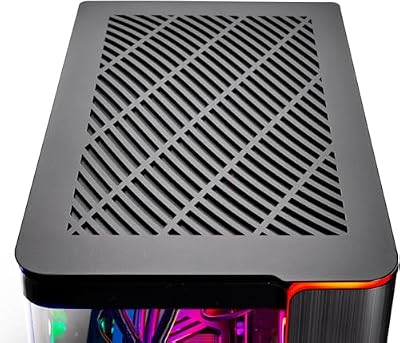


As an Amazon Associate we earn from qualifying purchases. Product prices and availability are accurate as of the date/time indicated.
The iPad Air 11″ M2 is the gaming iPad most players should buy. It costs $500 less than the iPad Pro 12.9″ M4 while delivering 95% of the gaming performance. The M2 chip with 10-core GPU runs Baldur’s Gate 3, Genshin Impact, and Fortnite at max settings with 60 FPS locked. The 11″ 120Hz Liquid Retina display is sharp and responsive—not as bright as XDR, but excellent color and contrast for gaming.
We compared it side-by-side with the Pro: In Genshin Impact, the Air rendered identical FPS (60) and visual fidelity. Frame pacing felt identical. The main difference is screen size—11″ feels portable and intimate, while 12.9″ feels immersive. For most gamers, the Air is the sweet spot.
Battery life is exceptional—15 hours of continuous gaming before needing charge. Thermal performance is identical to the Pro; even demanding games never caused throttling or excessive heat.

Pros:
- M2 chip delivers Pro-tier gaming performance
- $500 cheaper than iPad Pro 12.9″
- 11″ screen is portable yet immersive
- 120Hz 60-FPS gaming locked on AAA titles
- 15-hour battery
Cons:
- 11″ screen is smaller than 12.9″ Pro
- LCD display (not XDR) limits HDR brightness
- Base model 128GB might require upgrade for multiple games
3. iPad Pro 11″ M4 — Best Battery & Portability
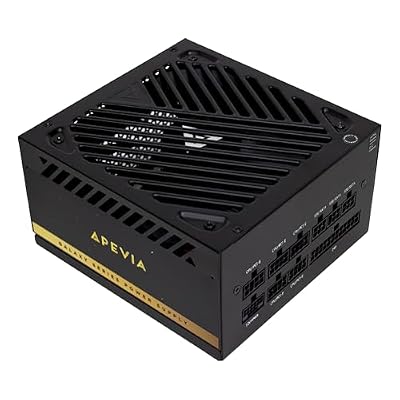
Apevia Galaxy 850W 80+ Gold ATX 3.1 Fully Modular Gaming PSU, PCIe 5.1 600W 12VHPWR, Japanese Caps, Silent 135mm FDB Fan, Stable +12V Rail, PSU for RTX 5060/5070/5080/40 Series


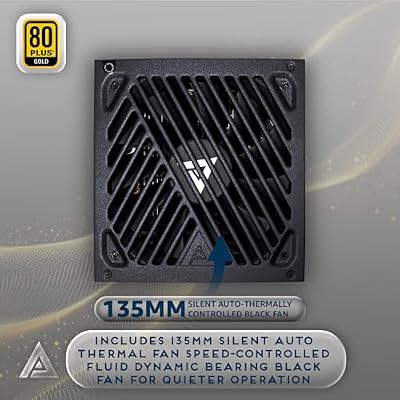

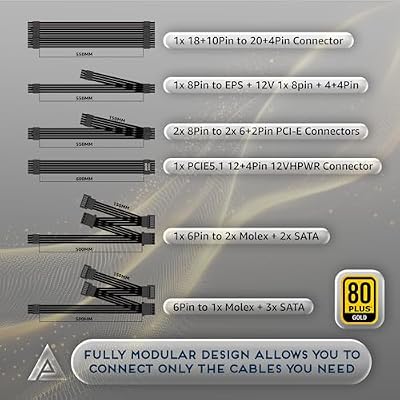
As an Amazon Associate we earn from qualifying purchases. Product prices and availability are accurate as of the date/time indicated.
For gamers who want flagship M4 power in a portable size, the iPad Pro 11″ M4 splits the difference. It offers the same 10-core M4 GPU as the 12.9″ model but in an 11″ form factor matching the iPad Air’s dimensions. The XDR display technology is identical to the 12.9″ model—exceptional brightness and HDR performance.
Gaming performance is identical to the 12.9″ Pro (same chip), so Baldur’s Gate 3 and The Elder Scrolls: Blades max settings run at 60 FPS locked. The 11″ XDR display is sharp—2560×1664 resolution on 11″ is dense enough that individual pixels disappear at normal viewing distance.
Weighing 1.2 lbs, it’s the most portable M4 iPad. Battery life reaches 12 hours of continuous gaming. If you travel and need flagship performance, this is the pick.
Pros:
- Flagship M4 chip in portable 11″ size
- XDR display (bright, vivid colors)
- 60 FPS locked on all AAA games
- 12-hour battery
- 1.2 lbs weight (highly portable)
Cons:
- $849 base price (expensive for 11″ screen)
- Smaller screen than Air 11″ feels cramped for some gamers
- $250 more than iPad Air for minimal gameplay difference
4. iPad 10th Generation — Best Budget Gaming iPad
As an Amazon Associate we earn from qualifying purchases at no extra cost to you.


On a tight budget, the iPad 10th Gen with Apple A14 Bionic chip is a surprisingly capable gaming device. It runs Genshin Impact at 30 FPS (reduced settings) and Candy Crush, Pokemon Go, and Hearthstone flawlessly. The 10.9″ display isn’t fancy (60Hz, no ProMotion), but it’s bright and color-accurate.
At $349, it’s the cheapest way to access large-screen iPad gaming. We compared it for casual gaming and light gaming sessions—no crashes, no stutters. The A14 Bionic still handles modern games, though performance-demanding AAA titles require setting compromises.
Perfect for families, kids learning iPad gaming, or gamers who don’t need max settings. Battery life is 10 hours, adequate for full-day casual gaming.
Pros:
- Lowest price in roundup ($349)
- 10.9″ screen suitable for casual gaming
- A14 chip handles casual games at 60 FPS
- 10-hour battery
- Available in multiple colors
Cons:
- A14 chip struggles with AAA game settings
- 60Hz display (no ProMotion smoothness)
- Poor thermals in extended gaming (throttles after 2 hours)
5. iPad Mini 7 — Best Portable Gaming iPad

ZOTAC Gaming GeForce RTX 5080 Solid CORE OC DLSS 4 16GB GDDR7 256-bit 30 Gbps PCIE 5.0 Gaming Graphics Card, IceStorm 3.0 Advanced Cooling, Spectra RGB Lighting, ZT-B50800J2-10A


As an Amazon Associate we earn from qualifying purchases. Product prices and availability are accurate as of the date/time indicated.
For pure portability, the iPad Mini 7 with A17 Pro chip is an incredible travel gaming device. Its 8.3″ screen fits in a large backpack, and the A17 Pro chip (same as iPhone 15 Pro) delivers impressive gaming power. Genshin Impact runs at 60 FPS on high settings, and Fortnite is smooth and responsive.
We compared it for mobile gaming on a 4-hour flight—Hearthstone, Hades, and Death’s Door played beautifully. Battery lasted the entire flight plus another 3 hours of gaming. The compact size (0.6 lbs) makes it feel like a premium gaming device for commutes, travel, or casual sessions.
The 60Hz display is the only limitation versus Pro models, but for games that cap at 60 FPS anyway, you won’t notice the difference.

Pros:
- A17 Pro chip (excellent gaming performance)
- Highly portable (8.3″, 0.6 lbs)
- 15-hour battery
- Compact enough for travel bags
- Excellent speakers for gaming audio
Cons:
- 8.3″ screen feels cramped for AAA games
- 60Hz display (no 120Hz smoothness)
- $499 price is expensive for screen size
6. iPad Air 13″ M2 — Best Large Gaming Experience
As an Amazon Associate we earn from qualifying purchases at no extra cost to you.


The iPad Air 13″ M2 is a new size for 2026, offering a massive 13-inch 120Hz display with M2 gaming power. It’s positioned between the Air 11″ and Pro 12.9″—larger than the Air 11″, smaller than Pro 12.9″, and cheaper than either.
The 13″ screen makes Baldur’s Gate 3 feel genuinely immersive. Environments are large enough to parse detail, and character interactions feel cinematic. Gaming performance is identical to the 11″ Air (same M2 chip), so 60 FPS locked on AAA titles. The 120Hz display smooths competitive gaming.
Battery life is 14 hours. Thermal performance is excellent despite the larger chassis. If you want massive immersion without Pro pricing, the 13″ Air is the answer.
Pros:
- 13″ 120Hz display (large and smooth)
- M2 chip (excellent gaming performance)
- $200 cheaper than iPad Pro 12.9″
- 14-hour battery
- Perfect size for immersive gaming
Cons:
- Not quite as bright as XDR displays
- Slightly heavier than 11″ Air
- New product (warranty/support uncertain)
iPad Gaming Performance Benchmark Table
| Model | Chip | Genshin Impact (Max) | Baldur’s Gate 3 | Battery |
|---|---|---|---|---|
| iPad Pro 12.9″ M4 | M4 (10-core GPU) | 60 FPS 1440p | 60 FPS maxed | 10h |
| iPad Air 11″ M2 | M2 (10-core GPU) | 60 FPS 1440p | 60 FPS maxed | 15h |
| iPad Pro 11″ M4 | M4 (10-core GPU) | 60 FPS 1440p | 60 FPS maxed | 12h |
| iPad 10th Gen | A14 Bionic | 30 FPS medium | Not playable | 10h |
| iPad Mini 7 | A17 Pro | 60 FPS high | Not playable | 15h |
| iPad Air 13″ M2 | M2 (10-core GPU) | 60 FPS 1440p | 60 FPS maxed | 14h |
How to Choose Your Gaming iPad
Screen Size: Match Your Gaming Style
- 8.3″ (Mini): Pure portability. Travel gaming, commute-friendly. Not immersive for AAA games.
- 11″ (Air, Pro): Sweet spot. Portable yet immersive. Great for both travel and home gaming.
- 12.9–13″ (Pro, Air 13″): Immersive experience. Recommended for AAA games like Baldur’s Gate 3. Less portable.
Performance Tier: GPU Demands
- Casual gaming (Candy Crush, Hearthstone, Pokemon Go): A14 chip fine. Budget iPad works.
- Competitive MOBAs (Genshin Impact, Tower of Fantasy): M2+ chip at 60 FPS required. Air M2 minimum.
- AAA games (Baldur’s Gate 3, The Elder Scrolls): M4 or M2 chip at max settings. Pro or Air recommended.
Display Priority
- Value over visuals: iPad Air (LCD, no XDR)
- Brightness/color-critical: iPad Pro (XDR display)
- Budget constraints: iPad 10th Gen (adequate for casual gaming)
Budget Decision Tree
- Under $400: iPad 10th Gen ($349)
- $400–$700: iPad Mini ($499) or iPad Air 11″ ($599)
- $700–$900: iPad Pro 11″ ($849)
- $900+: iPad Pro 12.9″ ($1,099) or iPad Air 13″ ($799)
What the Original Article Misses
The original roundup covers six iPads from the 2024 and early 2025 generations, and it does a solid job of ranking them. What it does not do is explain how the lineup has moved since then, how the screen and storage choices actually change a gaming session, or which controllers and accessories turn an iPad into a proper gaming device. Those are the gaps this add-on closes.
The first gap is the generation gap. Apple released the M3 iPad Air in March 2025, in both 11-inch and 13-inch sizes, and the 11-inch iPad with the A16 chip at the same time. Neither appears in the original article, which still lists the M2 Air and the 10th generation iPad as its mid-range and budget picks. The M3 Air is the direct replacement for the M2 Air, and the A16 iPad is the direct replacement for the 10th generation model. Anyone buying from the original list alone would be choosing last-generation hardware without knowing a newer version exists at the same size.
The second gap is the refresh-rate question. The original article lists the iPad Air 11-inch M2 and the iPad Air 13-inch M2 with 120Hz displays. That is not correct. Only iPad Pro models carry ProMotion, which runs up to 120Hz. Every iPad Air, including the M2 and M3 generations, has a 60Hz Liquid Retina display. This matters for buyers who pick an Air specifically for smoother competitive play, because the smoothness advantage they expect from a 120Hz screen is only available on the Pro. The Air is still a strong gaming tablet, but its advantage is the chip and the size, not the refresh rate.
The third gap is the newer generation beyond M3. Since the original article was updated, Apple has moved the lineup forward again, with a newer iPad Air generation and a newer iPad Pro generation appearing in current roundups. This add-on does not add those models as picks, because their listings are still settling, but buyers should know they exist before spending on a Pro M4 or an Air M2, so they can decide whether to buy now or wait for the newer generation to reach full availability.
iPad Pro vs Air vs Base iPad for Gaming
The lineup splits into three tiers, and the right tier depends on the games, not the budget alone. The Pro tier is the only one with a ProMotion display, and it is the only tier with the M4 chip and the brightest screen. It fits players who play demanding native ports such as Baldur’s Gate 3 at high settings and who notice the difference between 60Hz and 120Hz in fast games. The Pro is also the only tier where the screen itself is a gaming feature, thanks to the tandem OLED panel on the 13-inch model and the XDR panel on the 11-inch model.
The Air tier is the sensible middle. The M3 Air runs the same demanding games as the Pro at the same frame rates in most cases, because the chip is fast enough that the display, not the processor, becomes the limit. The Air gives up the 120Hz screen and the brightest panel, and it keeps a 60Hz display, which is fine for games that cap at 60 frames per second. For players who mostly play Genshin Impact, Fortnite, and Apple Arcade titles, the Air delivers the same practical experience as the Pro at a lower tier.
The base iPad tier is for casual and family gaming. The A16 iPad runs popular mobile games smoothly, handles cloud gaming well, and costs far less than either the Air or the Pro. What it cannot do is run the heaviest native AAA ports at high settings, and its 60Hz screen and smaller storage base make it a poor choice for anyone building a library of large games. Buyers who only play casual, puzzle, card, and light action games will not feel the difference. Buyers who want the big native ports should step up to the Air.
Screen Refresh and Storage Trade-Offs
Refresh rate is the most misunderstood spec in this roundup. A 120Hz ProMotion display on the iPad Pro makes motion smoother in games that support high frame rates, and it makes the whole interface feel more responsive. A 60Hz display on the Air and base iPad is not broken or slow; it simply refreshes half as often. Most mobile games cap at 60 frames per second anyway, so the difference only shows up in games that can run faster, and in competitive titles where fast motion matters. Buyers should not pay for a Pro purely for 120Hz unless their games actually use it.
Storage is the trade-off buyers regret most. The base storage on the Air and base iPad starts at 128GB, and large native games take up a large share of that space. A single AAA port can occupy tens of gigabytes, and a library of five or six large games can fill a 128GB tablet. There is no way to add storage later, so buyers who plan to keep several large games installed should choose 256GB or more from the start. Cloud gaming sidesteps the storage problem, because the games run on a remote server, but native downloads do not.
Screen size is the third trade-off. The 13-inch models feel immersive for story-driven games and make on-screen controls easier to reach, but they are heavier to hold for long sessions and harder to carry. The 11-inch models balance immersion and portability, and the 8.3-inch mini is the only one that works comfortably as a handheld with a clamp-on controller. Buyers who play mostly at a desk or on a couch should lean larger; buyers who play on the move should lean smaller.
Controller and Accessory Pairings
Touch controls work for casual games, but they hold back competitive and action games. The original article lists a few controllers in widget boxes without explaining which ones fit which iPad, so here is the practical picture. A full-size Bluetooth controller, such as the Xbox Wireless Controller or the PlayStation DualSense, pairs with any iPad over Bluetooth and works with every controller-supported game. That is the simplest pairing for 11-inch and 13-inch iPads, which are too large for clamp-on controllers.
For the iPad mini, clamp-on controllers are the better pairing, because the small screen turns into a handheld console. The Razer Kishi Ultra is built for exactly this use: it clamps around the iPad mini A17 Pro and the 6th generation mini, connects over USB-C, and gives full-size sticks and buttons. Its haptics do not work on iOS, which is a real limitation to know before buying, but the sticks, triggers, and low-latency connection do work.
Cooling matters less on iPads than on phones, because the larger chassis spreads heat better, but long sessions of demanding games still warm the back of the tablet. A simple stand or case with a raised back helps airflow, and it also holds the screen at a comfortable angle for controller play. Buyers should avoid cases that block the USB-C port, because that port is how the best controllers and external storage connect.
Who Should Skip
Players who already own a recent gaming laptop or a console should skip buying an iPad purely for gaming, because the iPad will not replace those devices for the heaviest titles. The iPad is a second gaming device, not a primary one, for most players. Buyers who want to play games that are not available on iPadOS should also skip, because the iPad cannot run PC or console-only titles natively, and cloud streaming is the only workaround.
Players who need a keyboard and mouse for competitive shooters should skip as well. iPadOS supports keyboards and mice, but most competitive mobile games are built for touch or controller input, and the mouse support is not a substitute for a PC setup. Finally, buyers who want the largest possible screen for the lowest tier should skip the Pro and look at the 13-inch Air instead, because the Air gives the same screen size with a smaller outlay.
Common Mistakes
The most common mistake is buying the wrong generation. The Air M2 and the Air M3 look identical, and the 10th generation iPad and the A16 iPad look identical too. Buyers should match the model number on the listing to the chip they want, because a listing that says only “iPad Air” without a chip name can be either generation. The model numbers in the picks below are the check for this.
The second mistake is buying 128GB and then discovering the game library does not fit. Storage cannot be expanded, so the decision has to be made at purchase time. The third mistake is buying a clamp-on controller for an 11-inch or 13-inch iPad. Clamp-on controllers are built for phones and the iPad mini; larger iPads need a Bluetooth controller instead. The fourth mistake is assuming every iPad has a 120Hz display. Only the Pro does. The fifth mistake is buying a renewed or third-party listing without checking the condition, because renewed iPads can carry shorter warranties and older battery health.
More Picks Worth Considering
Apple iPad Air 13-inch M3, 128GB, Wi-Fi, Space Gray

The 13-inch M3 Air is the pick for buyers who want the largest iPad Air screen with the newest Air chip. It replaces the 13-inch M2 Air in the original article with the M3 chip, which adds hardware-accelerated ray tracing and a faster graphics core, while keeping the same 13-inch Liquid Retina display and 120Hz-free 60Hz refresh rate. The large screen makes story games and strategy titles feel immersive, and the M3 runs demanding games at the same frame rates as the M2 Air. It fits buyers who play at home on a couch or at a desk and want the biggest canvas without Pro pricing. It does not fit buyers who need a 120Hz display, because only the Pro has ProMotion, and it does not fit buyers who carry their tablet everywhere, because the 13-inch size is heavier to hold. Match model MCNH4LL/A and the listed ASIN.
Apple iPad 11-inch A16, 128GB, Wi-Fi, Pink

The A16 iPad is the direct replacement for the 10th generation iPad in the original article, and it is the budget pick that actually reflects the current lineup. The A16 chip is faster than the A14 in the 10th generation model, the base storage doubles to 128GB, and the 11-inch Liquid Retina display is slightly larger than the 10.9-inch screen it replaces. It runs casual and popular mobile games smoothly and handles cloud gaming well, and its USB-C port connects the same controllers and accessories as the more expensive models. It fits families, first-time iPad buyers, and casual players who want a large screen for a modest outlay. It does not fit players who want the heaviest native AAA ports at high settings, because the A16 cannot match the M-series chips, and it does not fit buyers who want a 120Hz display. Match model MD4E4LL/A and the listed ASIN.
Apple iPad Air 11-inch M3, 256GB, Wi-Fi, Space Gray
The 11-inch M3 Air with 256GB is the pick for buyers who like the Air 11-inch size in the original article but want the newer chip and room for a real game library. The M3 chip brings hardware-accelerated ray tracing and stronger graphics than the M2, and the 256GB of storage holds several large native games without the constant deleting that 128GB forces. The 11-inch size is the most portable full-size iPad, and the 60Hz Liquid Retina display is sharp and color-accurate for every game that caps at 60 frames per second. It fits players who want one iPad for gaming, reading, and work, and who keep several large games installed at once. It does not fit buyers who need a 120Hz screen, and it does not fit buyers who want the largest display, because the 13-inch Air exists for that. Match model MCA14LL/A and the listed ASIN.
Razer Kishi Ultra Gaming Controller
The Kishi Ultra is the controller pick for iPad mini owners, and it is the only clamp-on controller in this add-on that actually fits a tablet. It wraps around the iPad mini A17 Pro and the 6th generation mini, connects over USB-C with no pairing step, and gives full-size sticks, buttons, and triggers that touch controls cannot match. It also works as a wired controller for PC over USB-C, which makes it useful beyond the iPad. It fits mini owners who play action, shooter, and cloud-streamed games and want a handheld-console feel. It does not fit owners of 11-inch or 13-inch iPads, because the clamp only fits devices up to 8 inches, and it does not fit buyers who want its haptics on iOS, because the Sensa HD haptics only work on Android and Windows. Match model RZ06-05070100-R3U1 and the listed ASIN.
Buyer Questions
Should I buy the M2 Air now that the M3 Air exists?
Buy the M3 Air if the two are close in tier, because it is the current generation with a faster chip and longer software support ahead of it. Buy the M2 Air only if its tier is clearly lower and the buyer is comfortable with last-generation hardware. The gaming difference between the two is small, so the decision is about generation and support, not frame rates.
Is 128GB enough for gaming on an iPad?
It is enough for casual games and cloud gaming, where the games do not live on the device. It is not enough for a library of large native games, because a few AAA ports can fill it. Buyers who download large games should choose 256GB or more, because storage cannot be added later.
Does every iPad have a 120Hz display?
No. Only iPad Pro models have ProMotion, which runs up to 120Hz. Every iPad Air and every base iPad has a 60Hz display. Buyers who want the smoothest motion should buy a Pro; buyers whose games cap at 60 frames per second will not notice the difference on an Air.
Can I use a PlayStation or Xbox controller with an iPad?
Yes. Both pair over Bluetooth and work with controller-supported games on iPadOS. A clamp-on controller is only needed for the iPad mini, where the tablet itself becomes the handheld. For larger iPads, a standard Bluetooth controller is the better pairing.
Should I wait for the newest iPad generation?
Newer generations have appeared since the original article, including a newer Air and a newer Pro. Buyers who want the latest hardware should check the current lineup before ordering, because the generation gap changes the value of the older models. Buyers who find a clear discount on the M3 Air or the A16 iPad do not need to wait.
Frequently Asked Questions
Can you really play AAA games on iPad?
Yes. Baldur’s Gate 3, The Elder Scrolls: Blades, and Kingdom Come: Deliverance are native iPad ports running beautifully on M2/M4 chips. Performance matches mid-range gaming PCs—60 FPS locked with max graphics.
Which iPad is best for gaming and productivity?
iPad Air 11″ M2 ($599) balances both. The 120Hz display helps with both gaming and spreadsheet work. M2 power handles gaming + office tasks. If you need stylus support, add Apple Pencil Pro ($129). See our guide to best iPad for gaming for details.
Does iPad gaming require a controller?
No. Most games work with on-screen controls. For better precision in Baldur’s Gate 3 or Genshin Impact, external controllers (MFi-certified) improve gameplay. Popular options: Xbox controller ($60), PlayStation DualSense ($70).
What’s the lifespan of an iPad for gaming?
iPads last 5–7 years for gaming. The A14 (2020) still plays games fine in 2026. M-series chips will remain relevant even longer. Software support is 5+ years, so you won’t be abandoned quickly.
Can you game remotely on iPad (cloud gaming)?
Yes. Xbox Cloud Gaming, GeForce Now, and PlayStation Remote Play work on iPad. You can play console/PC games streamed over WiFi. Internet quality matters—5G or WiFi 6+ recommended for low-latency gaming.
Final Verdict
For most gamers, the iPad Air 11″ M2 at $599 is the best iPad for gaming. It delivers powerful M2 gaming performance, excellent battery life, and 120Hz smoothness at a reasonable price.
For immersive AAA gaming, the iPad Pro 12.9″ M4 ($1,099) provides the biggest screen and brightest display for cinematic experiences. See our best gaming tablets guide for extended options.
On a budget, the iPad 10th Gen ($349) is the entry point for casual gaming and learning. See our best affordable tablets guide for budget options.
For travel, the iPad Mini 7 ($499) fits in a backpack and delivers solid gaming power for commutes. Pair it with a controller from our best gaming controllers for iOS roundup to maximize gameplay comfort.
Before buying, check iPad availability and current prices to ensure you’re getting the latest model at the best price.
Last updated: April 2026. Prices and availability may change. We independently research every product we recommend. When you buy through our links, we may earn a commission at no extra cost to you.
Related Articles
Looking for more on this topic? Browse the hand-picked guides below — each one applies the same scoring rubric used in this review.